
 ZeroGPT
 GPTZero
 QuillBot
 Grammarly
 Copyleaks
 Scribbr
 Originality.ai
 Isgen.ai
 SciSpace
 Sapling
 Winston AI
 Undetectable AI
 Smodin
 Writer
 JustDone
 Phrasly
 Brandwell
 Crossplag
 DeCopy AI
 NoteGPT
 Surfer
 SurgeGraph
 AI Detector
 Walter Writes AI
 Merlin
 Monica
 Stealthwriter
 Humbot
 Rewritify
 YouScan
 AI-Detector
 RyRob
RyRob Turnitin
 Pangram
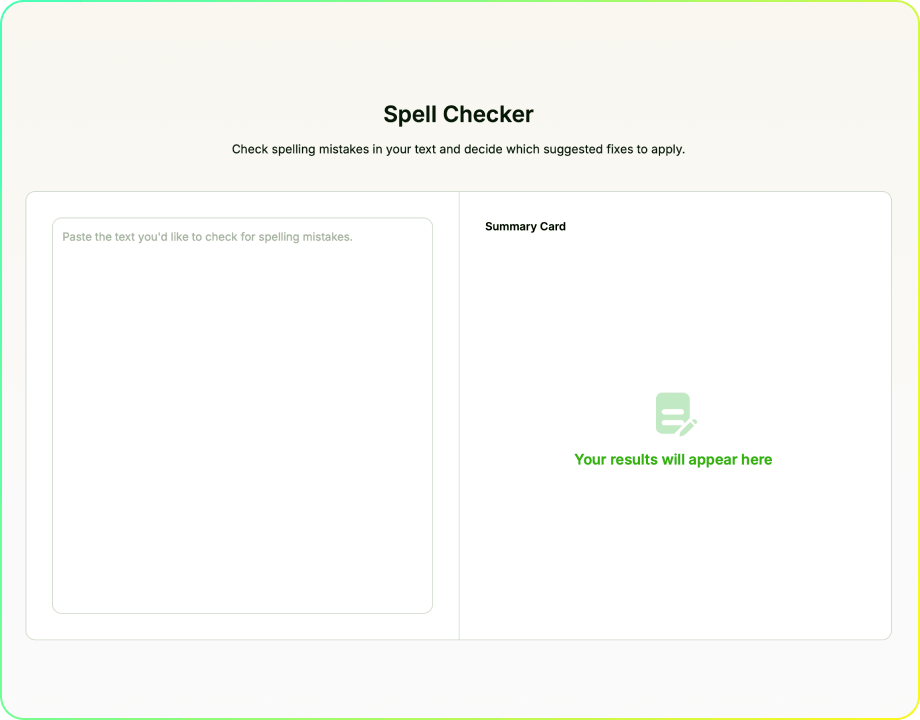
Spell Checker
Check spelling mistakes in your text and decide which suggested fixes to apply.
Summary Card
Check Spelling With EssayDone Spell Checker
A spell checker is most reliable late in revision, when surrounding context helps separate real errors from names, terms, and regional variants.
Step 1: Wait until the wording is stable. Run the online spell checker after major rewriting so time is not spent correcting sentences that will be deleted.
Step 2: Investigate the flag. Run the online spell checker in the relevant language and treat each highlight as a possible problem, especially for valid words used in the wrong place.
Step 3: Confirm the intended word. Accept a spelling change only when it matches the sentence meaning. Keep verified names, quotations, abbreviations, technical terms, and regional spellings.
Spell-Check Suspicious Words Without Losing the Sentence
Suspect Spellings in Context
Misspellings are easiest to judge when the surrounding sentence remains visible. EssayDone Spell Checker flags possible missing, added, transposed, or incorrect letters while leaving names, terminology, and valid unfamiliar words for human review.
Shows Suggestions for Context-Based Review
Choose the output language and number of outputs before running the check.
Review each highlighted word inside its complete sentence rather than judging it in isolation.
Compare the suggested correction with the word, meaning, and spelling convention you intended.
Accept useful corrections and dismiss suggestions that would damage a verified name, term, quotation, or intentional spelling.
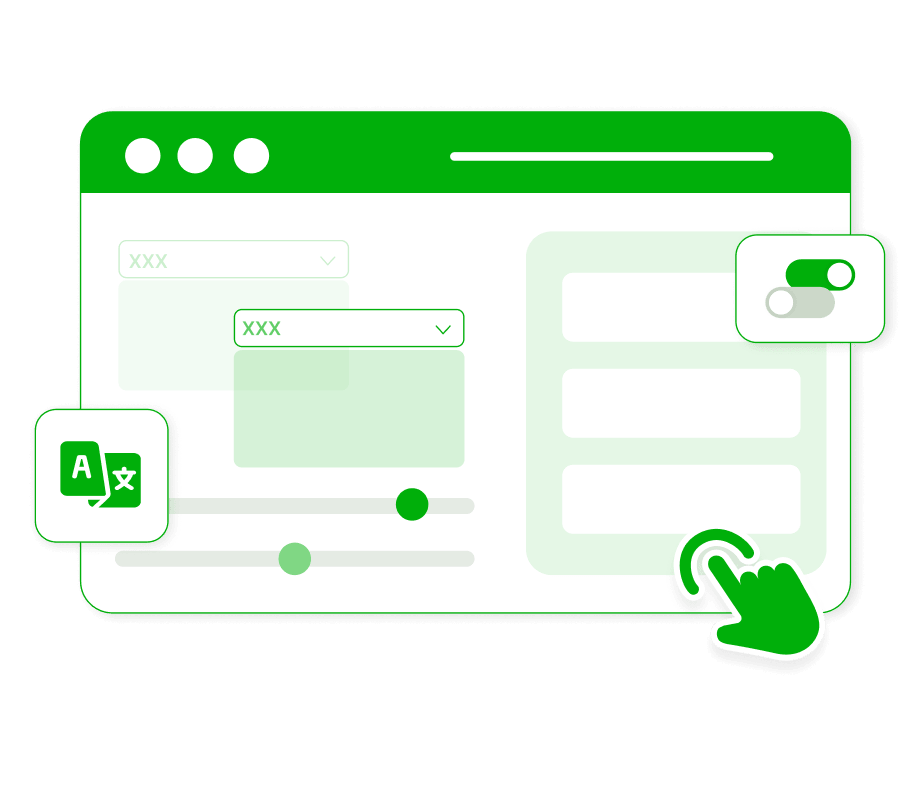
Keeps Word-Level Decisions Under Your Control
A spelling suggestion is not always the correct replacement. EssayDone keeps the original text and highlighted issue available for comparison so you can make the final decision, especially when reviewing proper nouns, technical vocabulary, abbreviations, and context-dependent words.
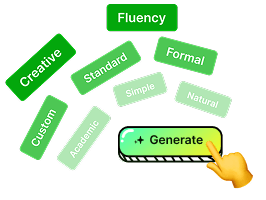
Likely Errors Rise to the Surface
Focus attention on suspicious forms while keeping valid names, technical terms, and regional spellings available for review.
Context Decides the Correction
A valid English word can still be wrong for the sentence, while an unfamiliar term may be correct.
Verified Terms Remain Protected
Names, abbreviations, quotations, and technical vocabulary can be checked before any replacement is accepted.

A Final-Draft Word Review
Before submission, a focused pass can protect names, technical terms, regional spellings, and real-word substitutions.

Spend Attention Where Errors Cost More
Direct manual attention to proper nouns, technical language, citations, and real-word errors where a wrong correction costs more.

Turn Repeated Errors Into a Watchlist
Record recurring confusion pairs and high-impact misspellings for faster checking in future drafts.
Which Spelling Errors Can an Online Spell Checker Miss?
A spell checker is usually better at flagging words that do not exist than words that are correctly spelled but wrong for the sentence. Separate obvious letter errors from context errors that can hide inside valid English.
Check Six High-Risk Spelling Traps
- Nonword errors: Missing, doubled, reversed, or added letters can create forms such as occured, publically, accomodate, or seperate. These are often easier to flag because the resulting form is not the standard spelling.
- Real-word substitutions: Trial can become trail, causal can become casual, public can become pubic, and form can become from. Every result is a valid English word, so the sentence meaning must reveal the mistake.
- Academic phrase errors: Check complete terms rather than isolated words. The standard expressions are odds ratio, principal component analysis, statistically significant, and Fisher's exact test—not odd ratio, principle component analysis, statically significant, or Fischer's exact test.
- Names, acronyms, and technical terms: A transposition such as brain → Brian may look like a proper name, software package, or abbreviation. Verify unfamiliar words against the original publication, official documentation, or an authoritative discipline source.
- Variant and consistency errors: Color and colour can both be correct, as can analyze and analyse. Choose the English convention required by the assignment, journal, or audience, then check that the same convention is used throughout the draft.
- Context example: “The trail found a statically significant effect on pubic health.” Every incorrect word exists in English. The intended sentence is: “The trial found a statistically significant effect on public health.”
Run a Faster Spell Check Without Missing Real-Word Errors
An online spell checker can reduce the number of words you need to inspect manually, but efficient proofreading still requires a separate pass for valid-word substitutions, protected terminology, and high-impact locations. Use this risk-first workflow instead of rereading every line with equal effort.
The Risk-First Spelling Audit

Freeze the Draft and Protect Key Terms
Finish major revisions, then list protected names, terms, abbreviations, and spelling variants.

Clear the Obvious Nonword Errors
Fix obvious missing, added, doubled, or transposed letters before broader editing.

Search Your Confusion Sets
Search recurring confusion pairs in context, such as affect/effect or principal/principle.

Audit the High-Cost Zones
Recheck titles, abstracts, headings, captions, citations, names, and repeated technical phrases.

Break the Reading Prediction
Read high-risk sentences aloud or in reverse order to notice the words actually present.
Turn Corrections Into a Personal Spelling Watchlist
The most efficient future spell check begins with errors you already know you repeat. Build a short list that can be searched in every important draft.
- Record the exact pair and its context: occured → occurred; principle → principal in principal component analysis; and statically → statistically in statistically significant.
- Label the cause of each mistake: doubled consonant, omitted letter, transposition, wrong suffix, homophone, real-word substitution, technical phrase, or inconsistent spelling convention.
- Before submission, search directly for every incorrect form on the list. A targeted Find search is faster and more reliable than hoping the word will look wrong during ordinary reading.
- Maintain a separate protected-term list containing verified surnames, place names, software, abbreviations, chemical or gene names, quoted spellings, and discipline-specific vocabulary.
- After receiving teacher, editor, or reviewer feedback, add only recurring or high-impact errors to the watchlist. Keep it short enough to search consistently instead of turning it into another dictionary.
A free spell checker can reduce time spent hunting for basic mistakes, leaving more attention for real-word substitutions, protected terminology, and high-impact locations where one wrong word creates confusion.
Use Find to inspect every occurrence of the word pairs you personally mix up.
Recheck the title, abstract, headings, keywords, captions, filenames, and author names separately.
Read high-risk sentences aloud and listen for a word that is grammatical but inconsistent with the intended meaning.
Need Help With the Next Part?
Move to the next step with tools for drafting, rewriting, checking, summarizing, and research.
 Outline GeneratorOrganize a topic into a practical structure before drafting.
 Introduction GeneratorDraft an opening around the topic, purpose, audience, and direction.
 Essay CheckerReview grammar, spelling, clarity, and sentence issues.
 Thesis Statement GeneratorTurn a topic and position into a focused central claim.
 Hook CrafterCreate opening lines suited to different topics, audiences, and formats.
 Conclusion GeneratorCreate a closing section from the claims and points already developed.
 ParaphraserRewrite text with controlled wording changes while preserving meaning.
 Essay EnhancerImprove clarity, flow, tone, and organization in an existing draft while keeping its core meaning.

Explore by Category
Writing
Spell Checker FAQ
The checker flags words that may need attention and keeps them in sentence context. You decide whether the suggested spelling matches the intended word, terminology, and regional convention.
EssayDone Spell Checker is free to run. It narrows the review to likely spelling problems, while names, technical terms, regional variants, and real-word errors still need your judgment.
Yes. EssayDone Spell Checker is not limited to English. Select the language that matches the text so the review can apply the relevant spelling patterns. Names, specialist terms, regional variants, and correctly spelled words used in the wrong context still require judgment.
It can surface likely missing, added, doubled, reversed, or misplaced letters and possible word-form problems. Context is still needed for valid-word substitutions such as trial/trail or causal/casual.
A spell checker focuses on word forms and likely misspellings. A grammar checker also reviews agreement, tense, articles, usage, sentence structure, and often punctuation.
The unintended word may still exist in English. A dictionary-based check may not flag form/from, principal/principle, or public/pubic, so the complete sentence and subject knowledge must decide.
Verify them against the original publication, official documentation, or an authoritative subject source. Dismiss a suggestion when the existing spelling is confirmed and intentional.
Choose the convention required by the audience, assignment, or publication, then search common variants such as color/colour and analyze/analyse. Preserve the original form inside quotations and official names.
Verify the word manually when it is a name, quotation, abbreviation, technical term, regional spelling, product name, or a valid English word whose meaning may not fit the sentence.
🔗 References
Spelling references and proofreading guidance explain how an AI spell checker should handle real-word errors, regional conventions, names, abbreviations, and technical vocabulary in context.

- University of Toronto Writing Advice|Some Tools and Rules to Improve Your Spelling
- University of Toronto Writing Advice|Using the Computer to Improve Your Writing
- Cambridge Dictionary — English Grammar Today|English Grammar Today: Spelling
- Merriam-Webster|A List of Most Commonly Confused Words
- George Mason University Writing Center|Grammar and Style: Proper Nouns