






Walter Writes AI Humanizer Review: Our Rewrite Tests

If you are using Walter to make a draft sound more natural, the real question is whether you can trust the new wording. We tried an academic paragraph and an everyday email in the Walter AI Humanizer. Both rewrites received lower AI detector scores, but one invented a school withdrawal and the other changed a reply time.
The complete inputs and outputs below show where those changes happened. They matter more than a reassuring badge if you plan to use the rewrite in real work.
Test 1: A qualified academic finding
We tested the signed-in free trial on November 16, 2026, using University / General / Simple settings. Both source passages were AI-written test inputs; the academic scenario is hypothetical, not a real study finding.
Original input, 60 words
In a hypothetical 12-week pilot involving 84 students, optional study sessions were associated with higher attendance, but the data did not establish that the sessions caused the increase. Two students withdrew before the final survey. The comparison did not adjust for students' prior attendance, and participants chose whether to attend the sessions. These limitations make a causal interpretation especially uncertain.
Complete Walter output, 87 words
In a theoretical twelve-week pilot of eighty-four students, there was an association in this pilot between attending optional study sessions and having higher attendance; however, the data did not show that the optional study sessions produced the increase. Also two students withdrew from school before completing the last student survey. There is no adjustment for student's prior attendance in this comparison. Students also had a choice as to which optional study sessions they attended. Due to these factors it is especially difficult to make a causal conclusion.
Walter kept the number of students and the distinction between correlation and causation. “The data did not show that the optional study sessions produced the increase” faithfully restates the cautious finding. But the rewrite says the two students “withdrew from school.” The source says only that they withdrew before the final survey; leaving school is a new claim. It changes “students' prior attendance” to the awkward singular “student's prior attendance,” repeats “pilot,” and adds 27 words without useful detail. The result reads more labored than the source.
The detector numbers moved in Walter's favor. GPTZero's Basic Scan changed from 100% AI on the source to 0% AI on the output. Copyleaks marked 60 of 60 source words as AI text and 0 of 87 output words as AI text. Walter's editor displayed “Passed AI detectors” for its rewrite, but did not expose a comparable numeric score there. Those are observed interface results, not proof that the new statement about students is safe to publish.
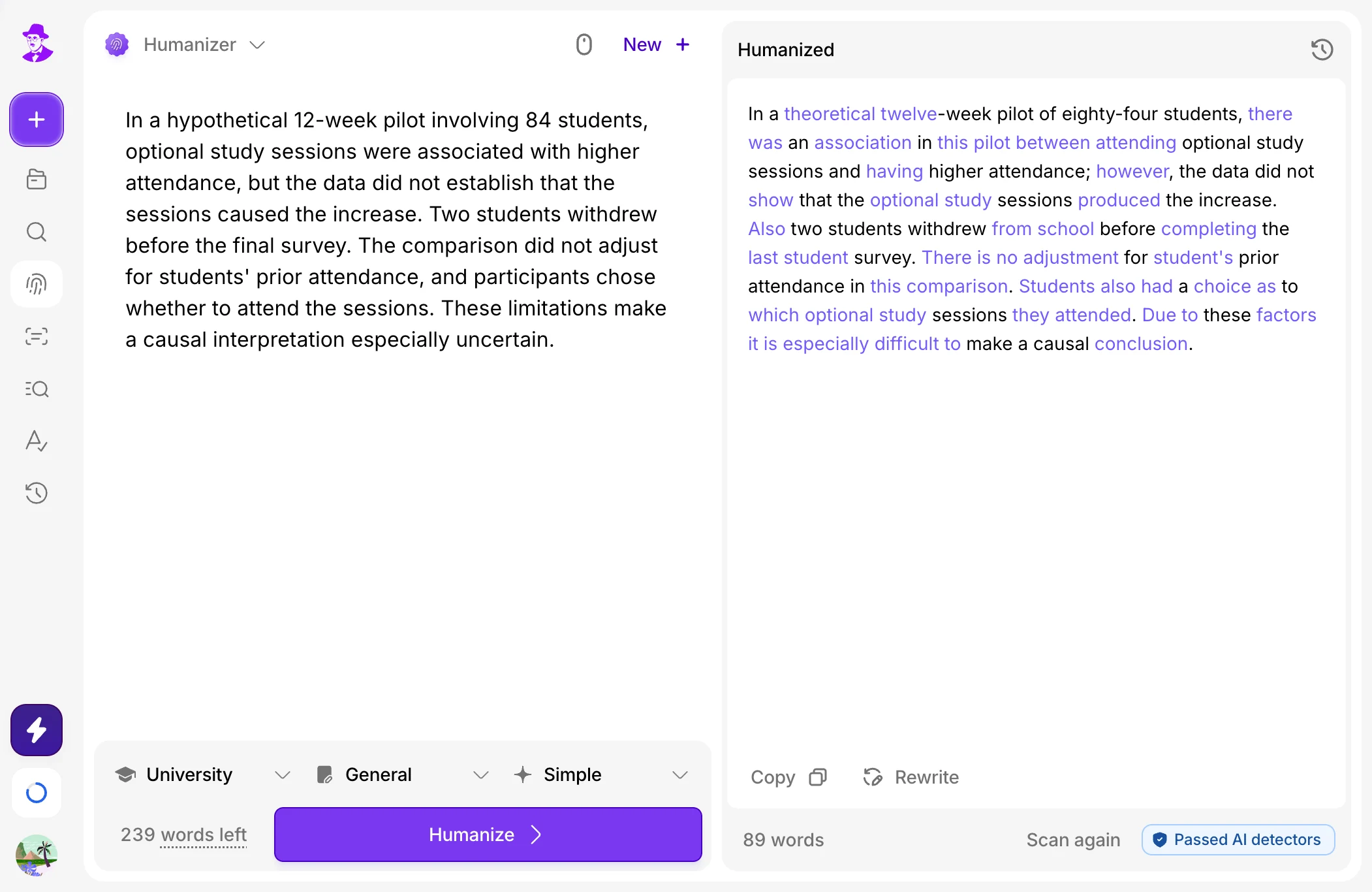
The editor shows the source beside Walter's full rewrite. The key change to inspect is “withdrew from school,” which adds a fact absent from the input.
Detector screenshots, original → Walter rewrite:
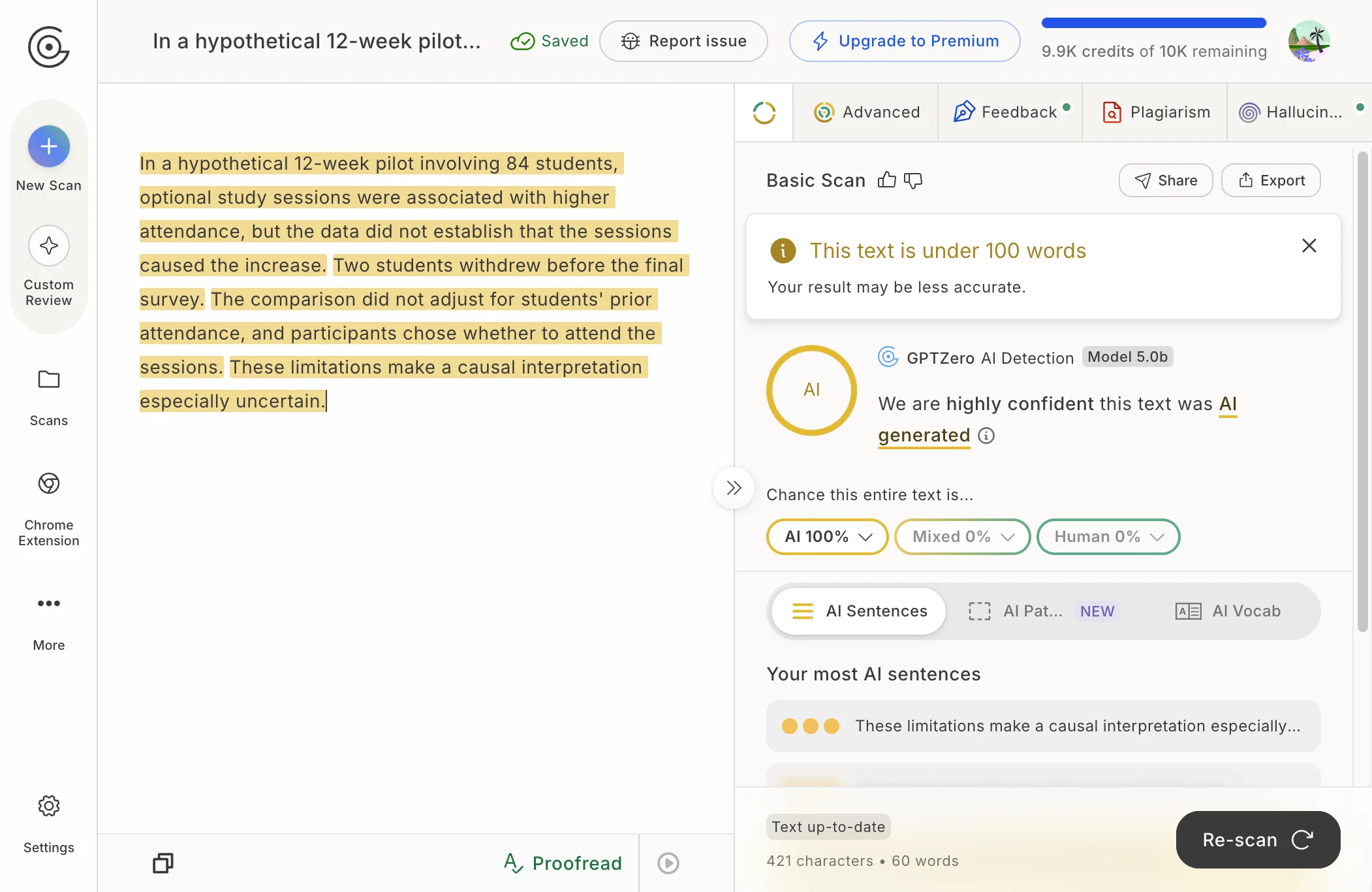
GPTZero called the original academic passage 100% AI, giving us the baseline for this same text.
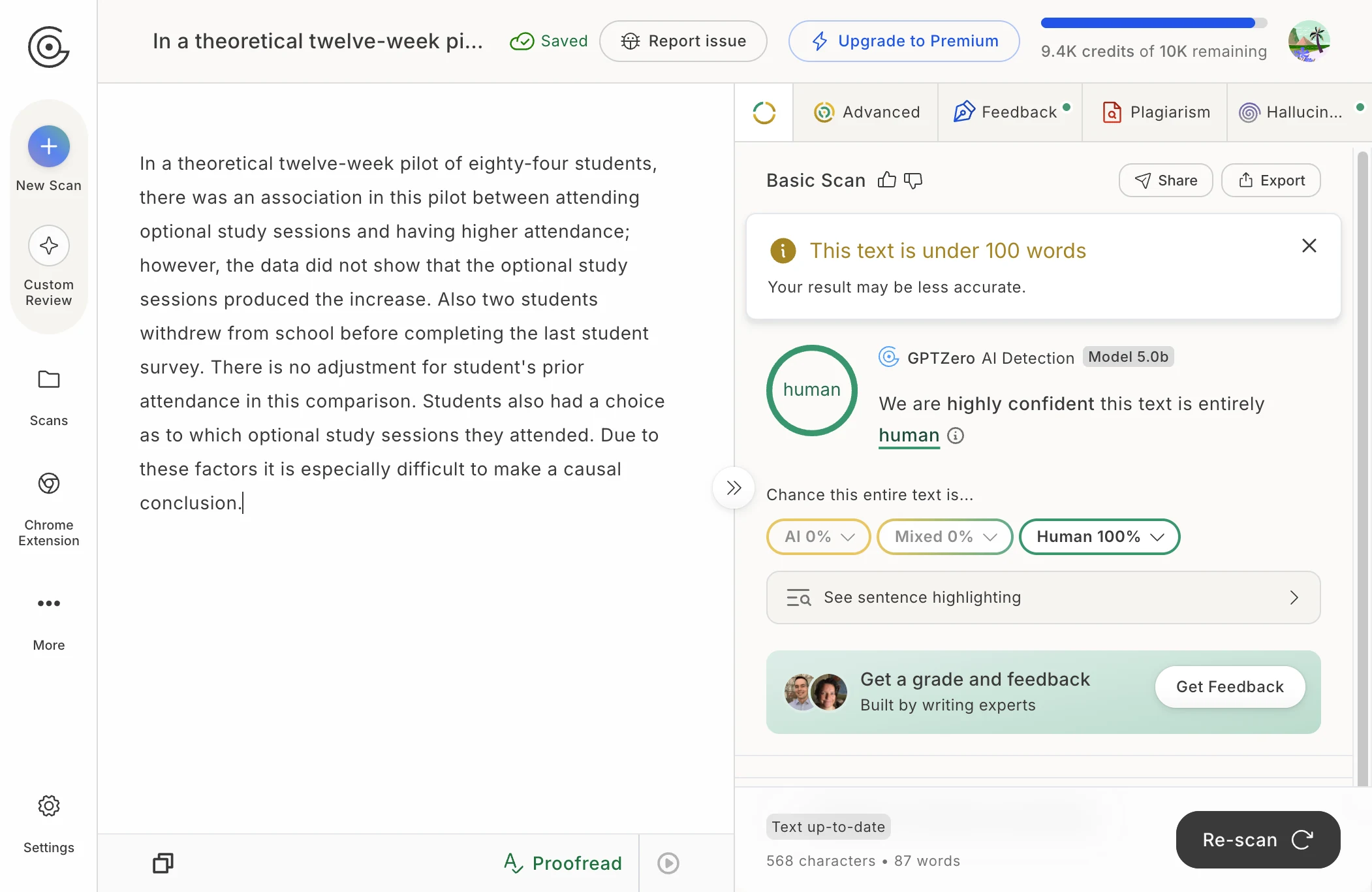
The Walter version fell to 0% AI in GPTZero. That score change did not catch the new claim about leaving school.
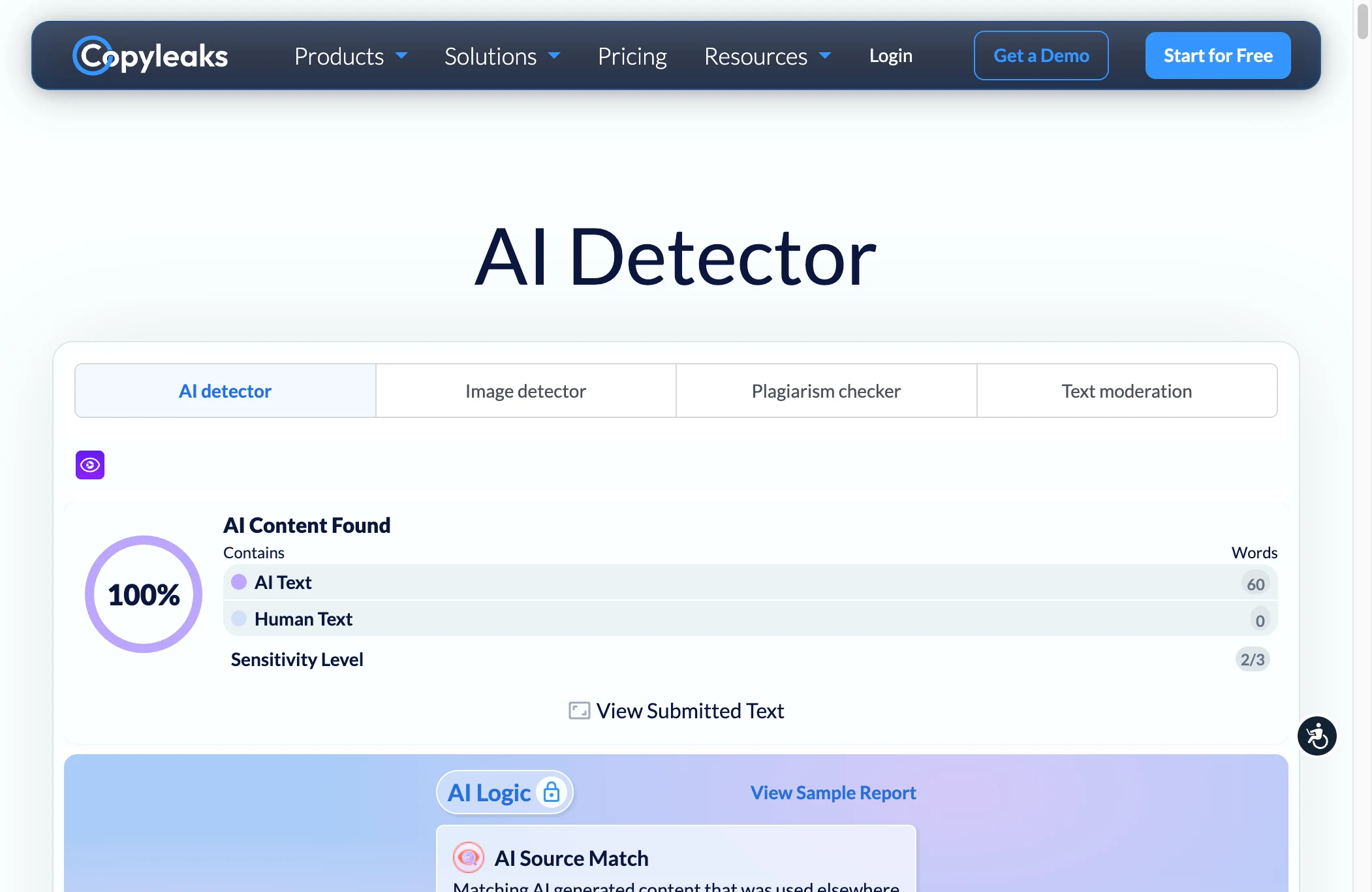
Copyleaks marked all 60 source words as AI text before the rewrite.
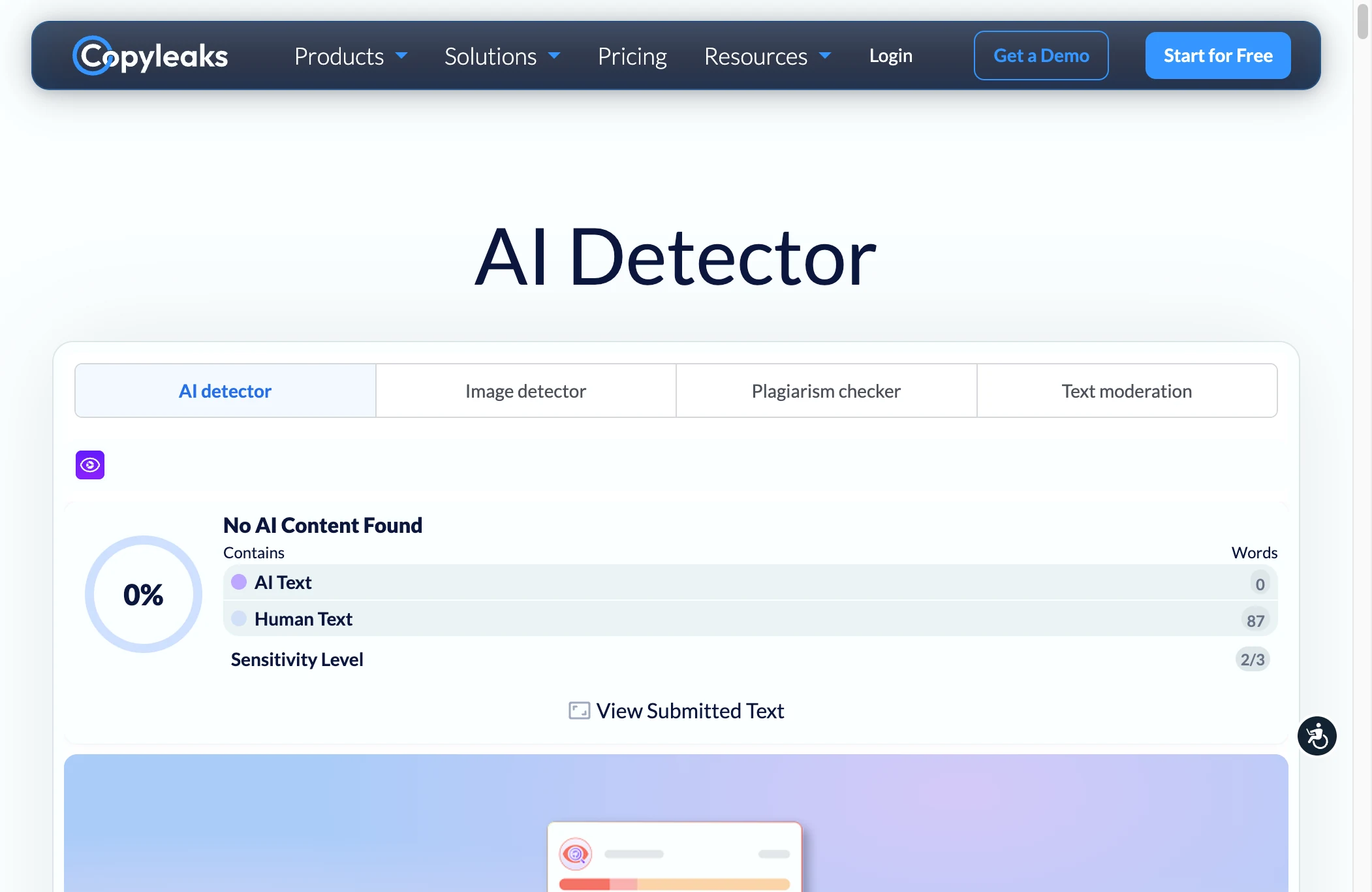
After rewriting, Copyleaks marked none of the 87 words as AI text, while the prose became longer and less precise.
Test 2: An ordinary email with deadlines
Original input, 61 words
Hi Maya, I can send the draft by Thursday afternoon, but I cannot attend Friday's call. Could you put your comments in the document by noon on Friday? I will reply after 3 p.m. The figures in section two are still provisional, so please do not forward that page to the client yet. I will send a confirmed chart on Monday.
Complete Walter output, 83 words
Hi Maya, I'll be able to get the first draft out by this Thurs. Afternoon, but unfortunately, I won't be able to make Friday's conference call. If you could post your comments into the document by Noon on Fri., I'll try to respond with my comments by 3pm. Please don't forward the Section II charts (the numbers) to our client at this time as they are still just estimates and I will be sending them a final version of these charts next Mon.
“I won't be able to make Friday's ... call” is conversational, but the rewrite adds “conference,” calls the draft the “first” draft, and replaces plain dates with “Thurs. Afternoon,” “Noon on Fri.,” and “next Mon.” More seriously, “I will reply after 3 p.m.” becomes “I'll try to respond ... by 3pm.” The direction of the deadline reverses, and a firm commitment becomes tentative. The source says not to forward that page because the figures are provisional; the rewrite describes “Section II charts” and “the numbers,” adding specificity the sender did not provide. It turns one confirmed chart on Monday into multiple final charts.
Detector results for the email rewrite
- GPTZero: changed from 100% AI on the original to 6% AI / 94% human on Walter's output.
- Copyleaks: could not score the original email because its live form required at least 350 characters. It marked 0 of 83 output words as AI text for the rewrite.
- Walter's own editor: displayed its “Passed AI detectors” badge.
Our takeaway: the detector scores improved, but the email still needs manual repair because “after 3 p.m.” and “by 3 p.m.” are not interchangeable.
The screenshot below shows Walter's rewritten email in the live editor.
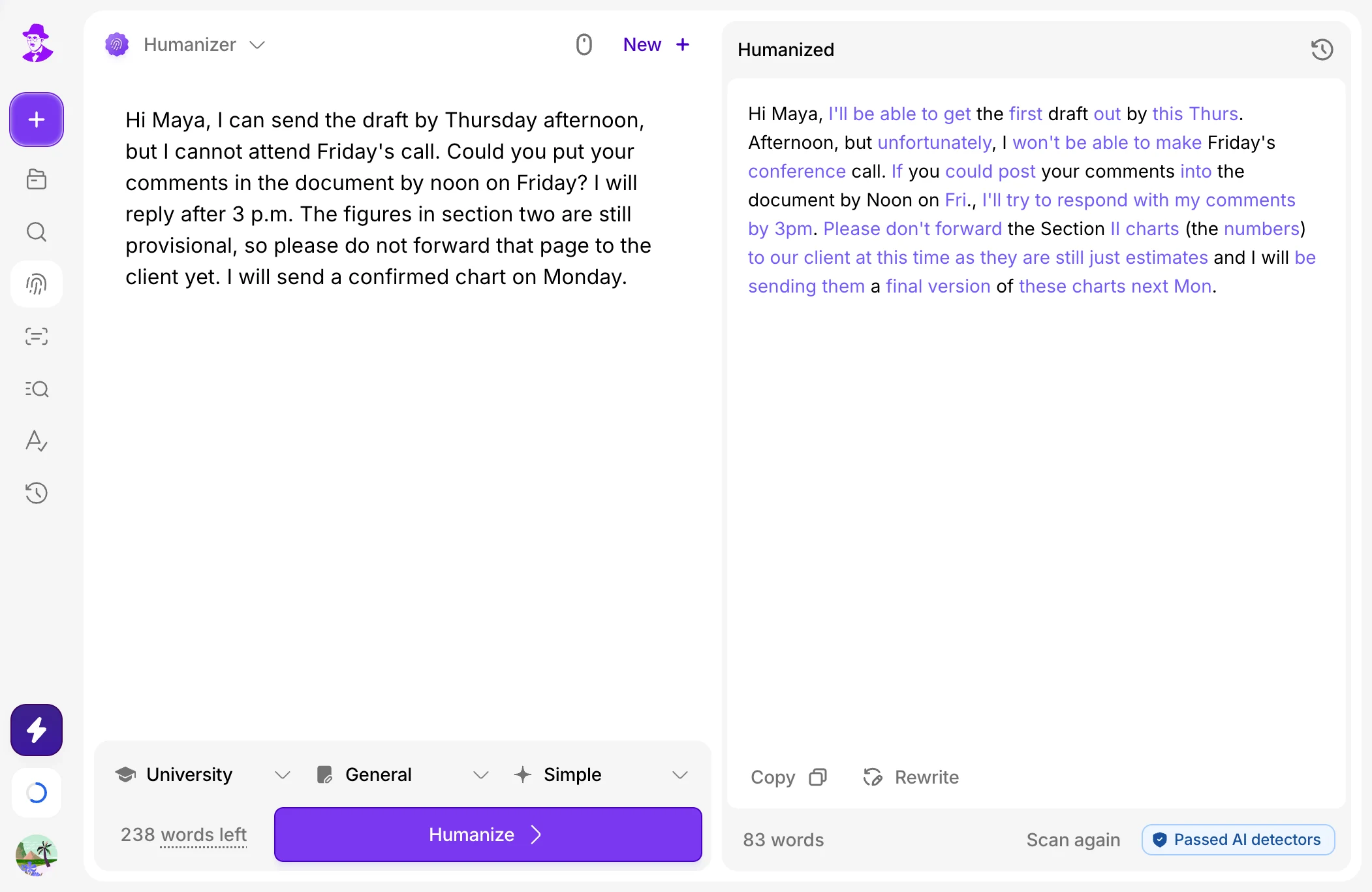
The live editor preserves the whole email. Compare “after 3 p.m.” in the source with “by 3pm” in Walter's output: the timing changes.
Detector screenshots, original → Walter rewrite:
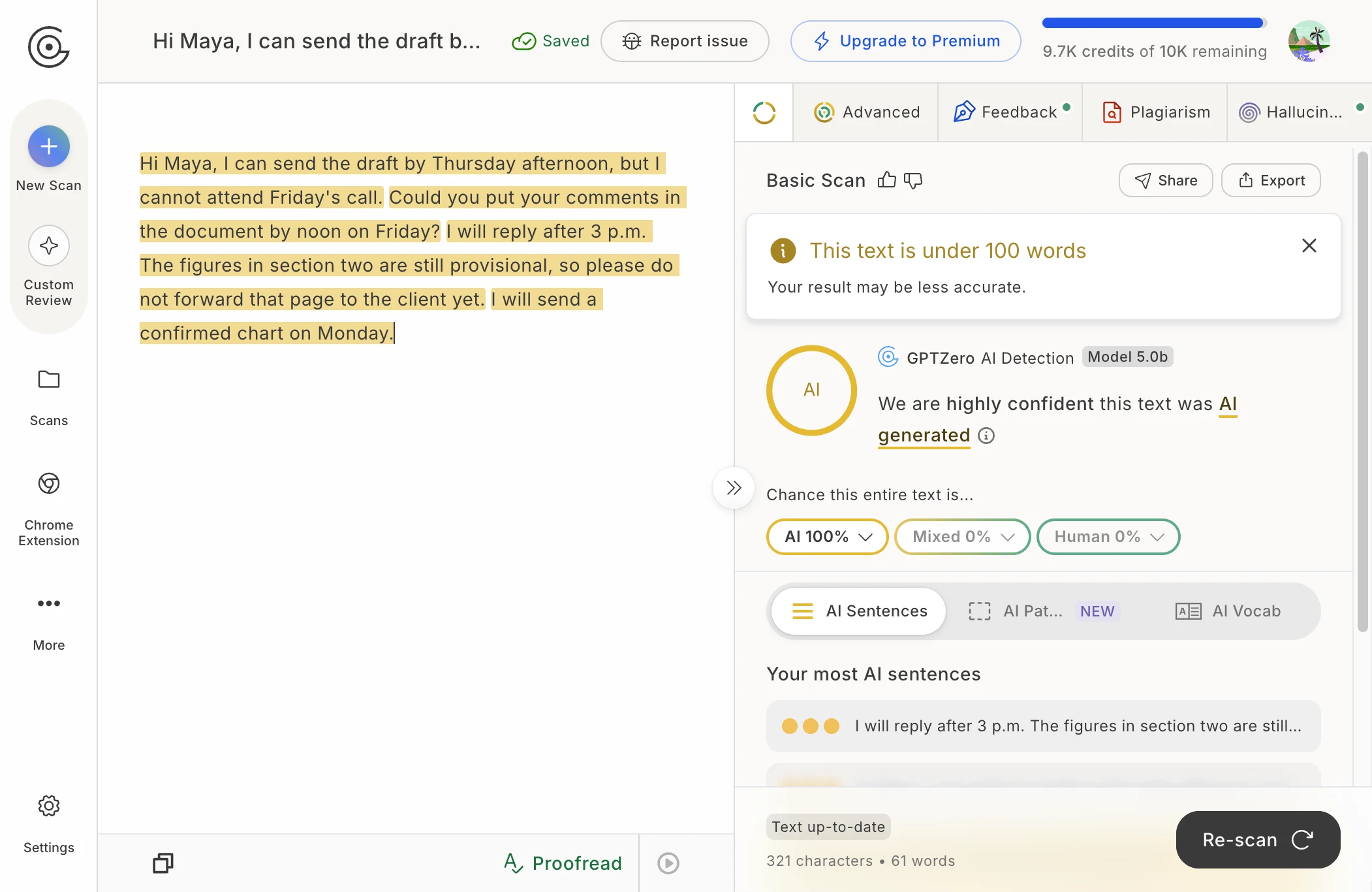
GPTZero classified the original email as 100% AI before any rewriting.
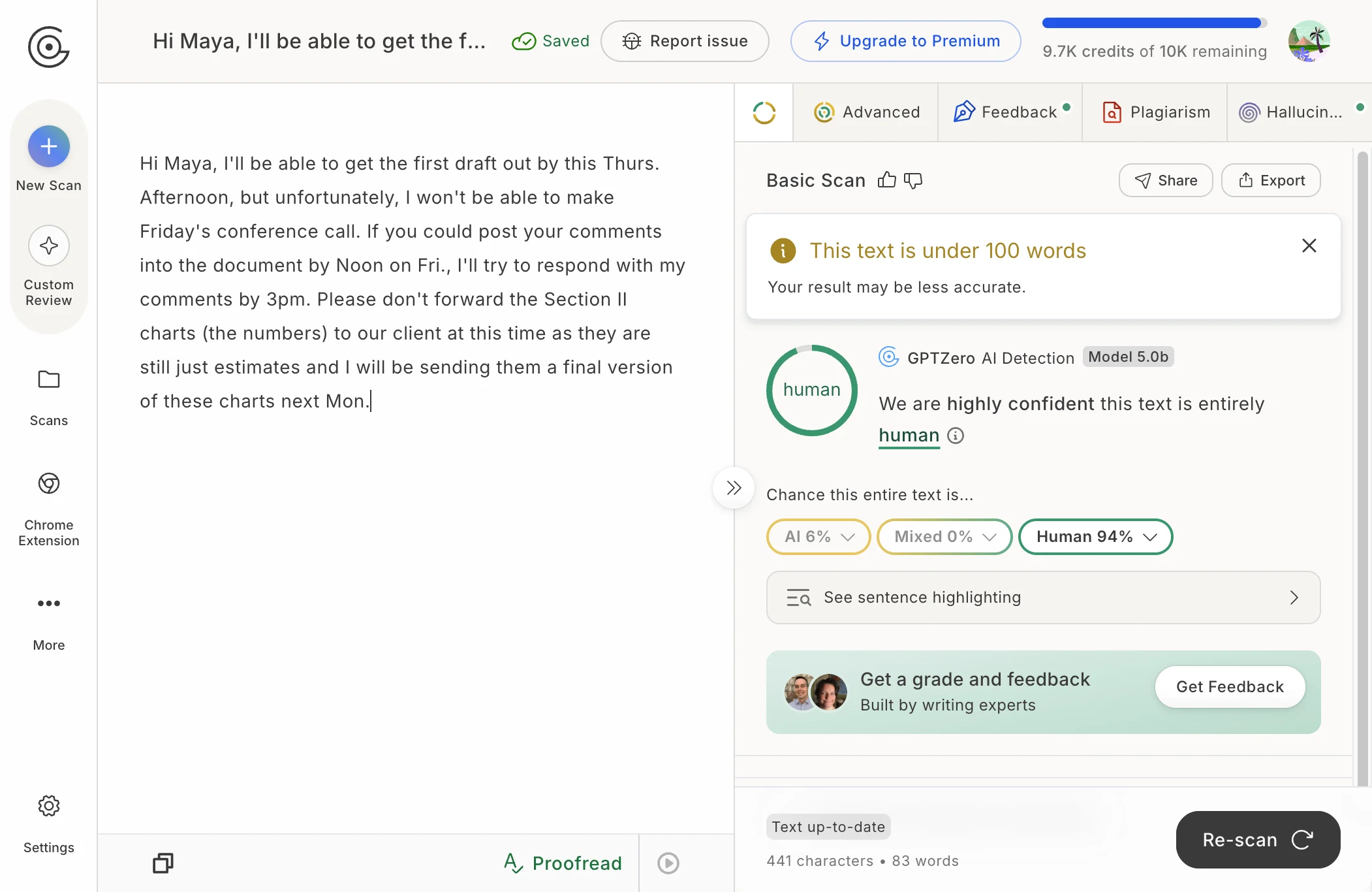
The rewritten email scored 6% AI, yet its lower score says nothing about whether the altered deadline is safe to send.
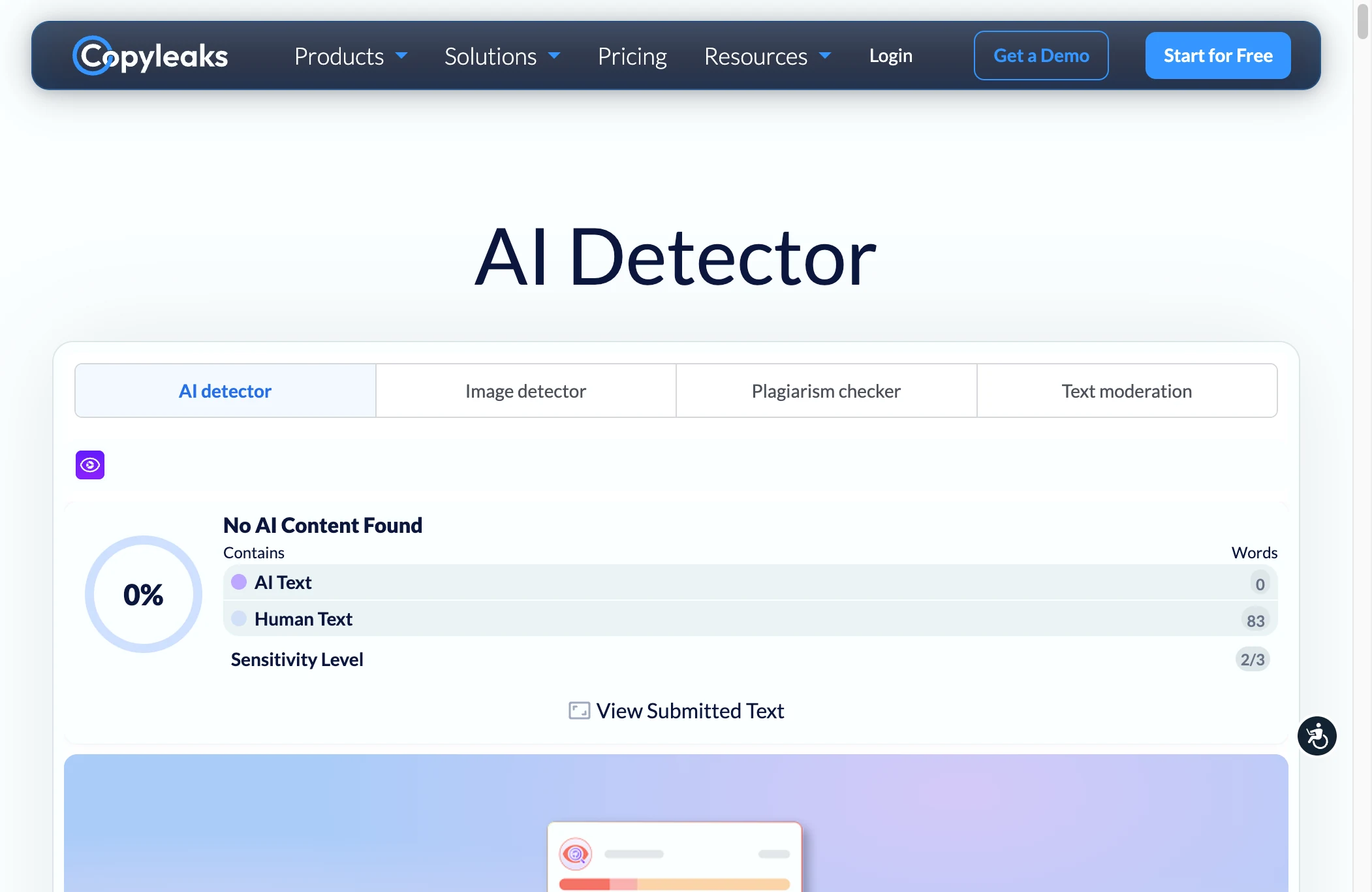
Copyleaks marked none of Walter's 83 email words as AI text; this is an output-only result, not a before-and-after comparison in that tool.
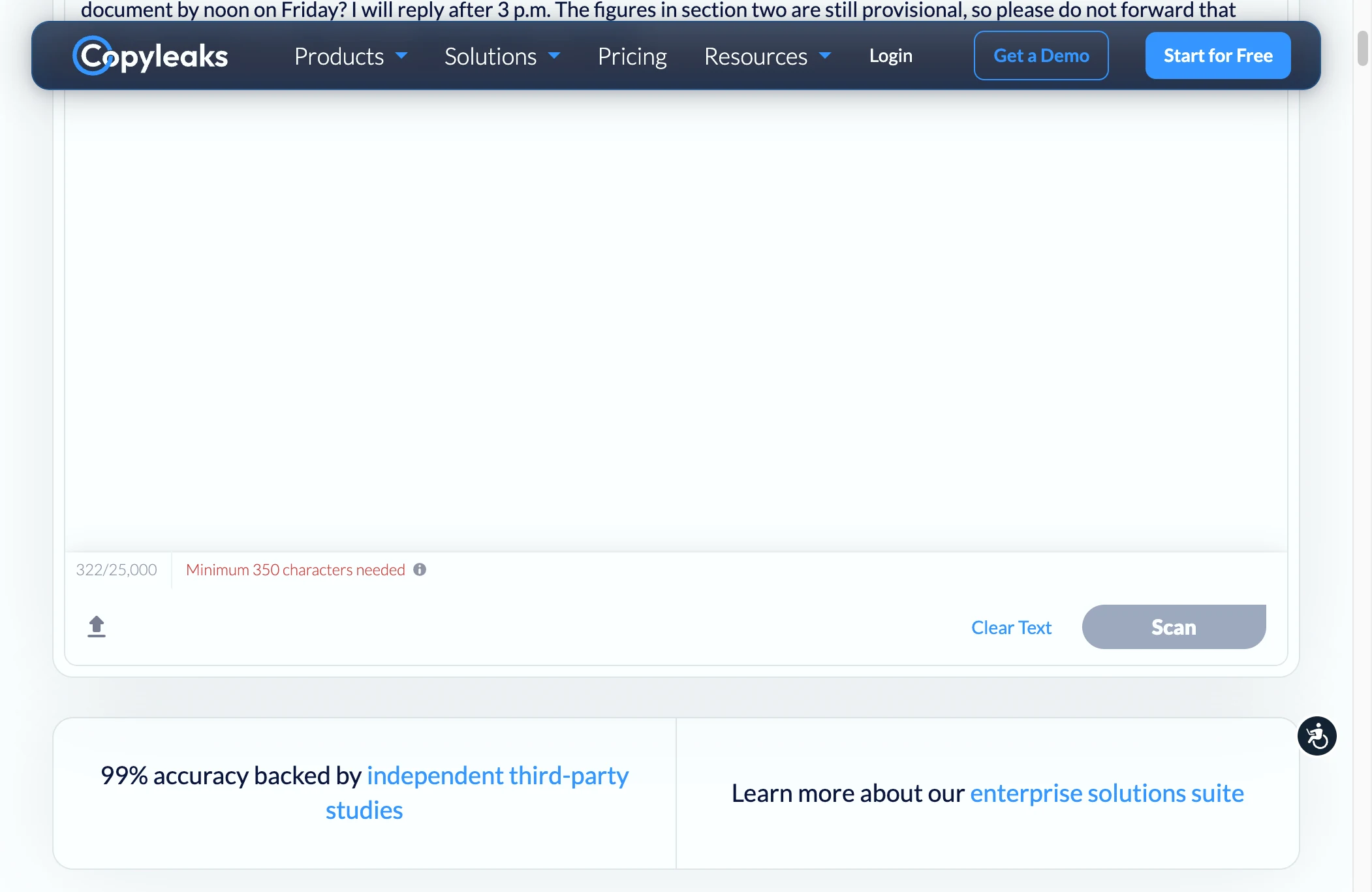
The original email was below Copyleaks' 350-character minimum, so there is no valid Copyleaks baseline for this test.
What is free, and what does paying buy?
Walter's trial instructions describe a one-time 300-word Humanizer allowance and three days of detector access. Our signed-in dashboard initially showed 300 available words, and both short rewrites completed. The public site's separate description of a no-signup Lite tool refers to a 300-word per-pass cap; do not treat that as the signed-in allowance renewing every day. Walter's API credits are a separate product and do not enlarge the consumer trial.
The pricing page shows these annual-billing prices and limits:
| Plan | Monthly allowance | Maximum per request | Annual billing |
|---|---|---|---|
| Starter | 30,000 words | 750 words | $8/month equivalent; $96/year |
| Pro | 70,000 words | 1,500 words | $13/month equivalent; $156/year |
| Elite | 200,000 words | 2,000 words | $26/month equivalent; $312/year |
A monthly billing toggle is also available. The per-request ceiling matters if you plan to paste long chapters; a large monthly pool does not remove that single-request limit.
Paid access buys more volume and advanced settings, not a fact checker. In our free Simple-mode tests, one output introduced a false school withdrawal and the other changed a response time. Upgrading might change the wording, but we did not test paid modes, so there is no evidence here that they fix those errors.
Verdict: should you pay for Walter Writes?
For short, low-stakes drafting, Walter is useful as a source of alternate wording and it lowered GPTZero's AI classification on both examples. We would not pay for it solely to make text “undetectable,” and we would not submit its output unchecked. The academic rewrite was longer and less precise; the email rewrite changed a deadline. If your work contains methods, caveats, dates, or client instructions, the correction time may wipe out the speed benefit.
The best case for a paid plan is repeated work where you can check every altered claim and where the monthly and per-request limits fit your workflow. Try the one-time allowance on a representative paragraph before committing to annual billing. Our results suggest a simple rule: accept an improved sentence only after its meaning survives comparison with the original. A favorable detector result cannot rescue a wrong fact.
If you want a second version to compare, try a representative paragraph in EssayDone Humanizer. Keep your source beside both rewrites and choose the wording that still says what you meant. Your reader will notice a wrong date or changed claim long before they see a detector score. EssayDone's separate Walter AI Detector review covers its detection product.