



TinyWow Review: Features, Pros & Cons | All You Need to Know

TinyWow is worth judging by the workflow it supports, not only by how quickly it produces text. This review covers its main features, realistic limits, pricing cautions, and best-fit use cases for student writing or research. For academic users, the output still needs a final pass for accuracy, formatting, and assignment fit.
I'll cover what TinyWow does well, where its free tools feel limited, and which features need extra review before you use them for academic or professional work. The useful question is whether the tool saves time while still leaving room for source checking, assignment fit, and human revision. This extra review step helps keep the tool useful without overstating what it can do.
The goal is to help you decide when TinyWow is enough and when a more specialized writing tool makes more sense. For students, the useful measure is whether it improves the workflow while keeping the final judgment in human hands. That context gives readers a more realistic way to decide whether the feature fits their workflow.
TinyWow Review: How to Test It Before Paying
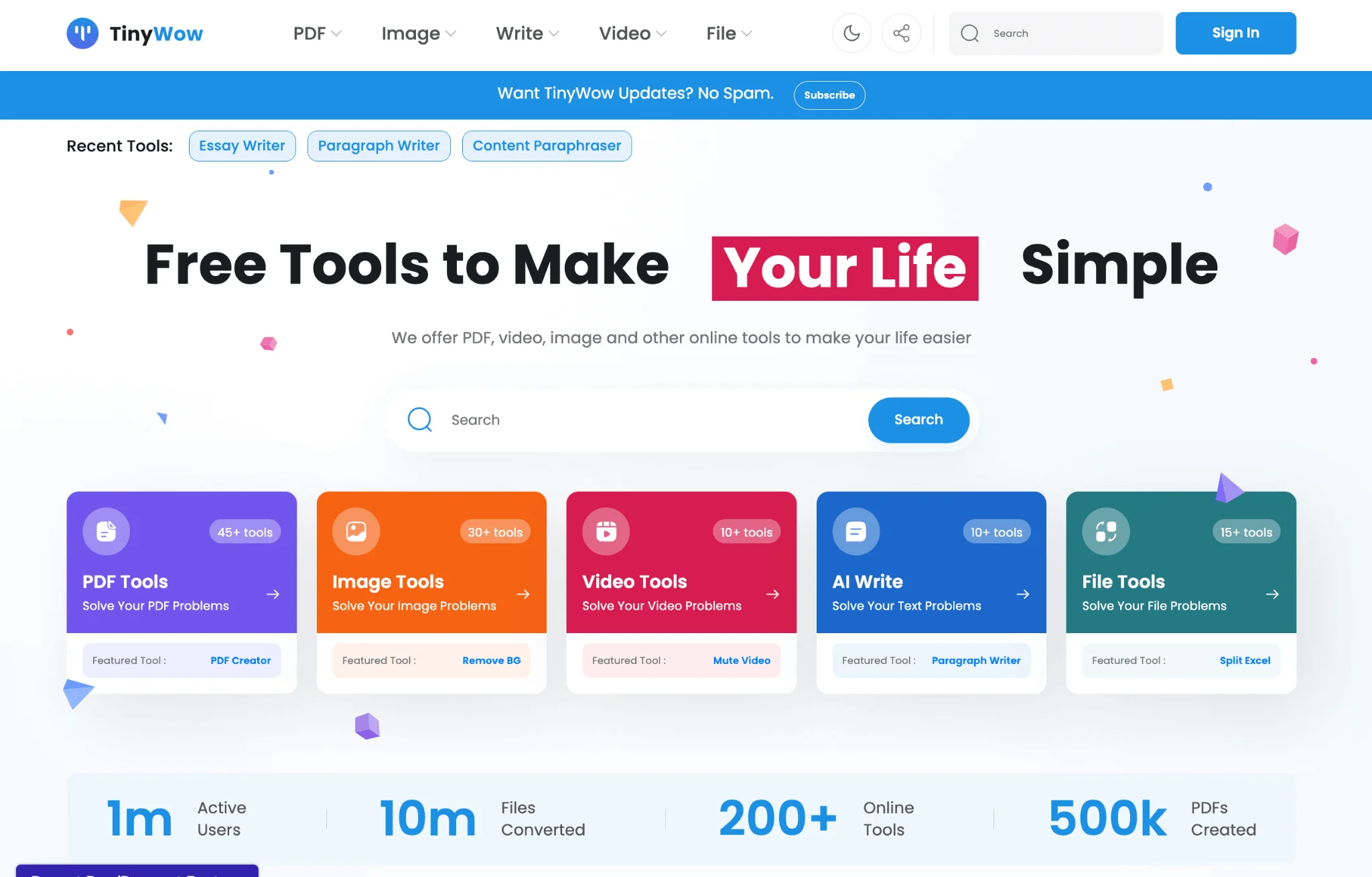
TinyWow is presented as a browser-based utility suite. A useful review should test the product against a defined job rather than repeat its marketing claims. Use the same source material for every comparison, save the original and result, and separate output quality from convenience.
Test | What to do | Evidence to record |
|---|---|---|
Core workflow | Complete one realistic task using the exact tools needed for a real task. | Steps required, processing time, errors, and manual work needed. |
Quality | Check output quality. | Missing facts, changed meaning, weak sentences, and corrections made. |
Boundary case | Try a short, long, or technically complex input within the stated limits. | Where the result becomes incomplete, inconsistent, or unusable. |
Plan fit | Compare the free or trial experience with the current paid plan page. | Current price, renewal terms, credits, limits, and cancellation path. |
Risk check | Review file handling and limits. | Privacy terms, source handling, policy constraints, and unsupported promises. |
Decision Checklist
Can you reproduce a useful result on your own material, not only the provider's demo?
How much editing is needed before the output is accurate and ready to use?
Does the tool preserve citations, quotations, formatting, and intended meaning where relevant?
Are current price, limits, data handling, refund terms, and cancellation steps acceptable?
Product plans and interfaces change. Verify today's details on the official site and treat promises of certain results or universal detector bypass as marketing, not proof.
What is TinyWow: Features and Pricing
TinyWow is an AI-assisted writing or study tool that should be judged by output quality, control, and revision support. For students, the important test is whether it helps organize work without replacing source reading, critical thinking, or final editing. The safer approach is to test the feature on a low-stakes task before using it for important work.
Key Features
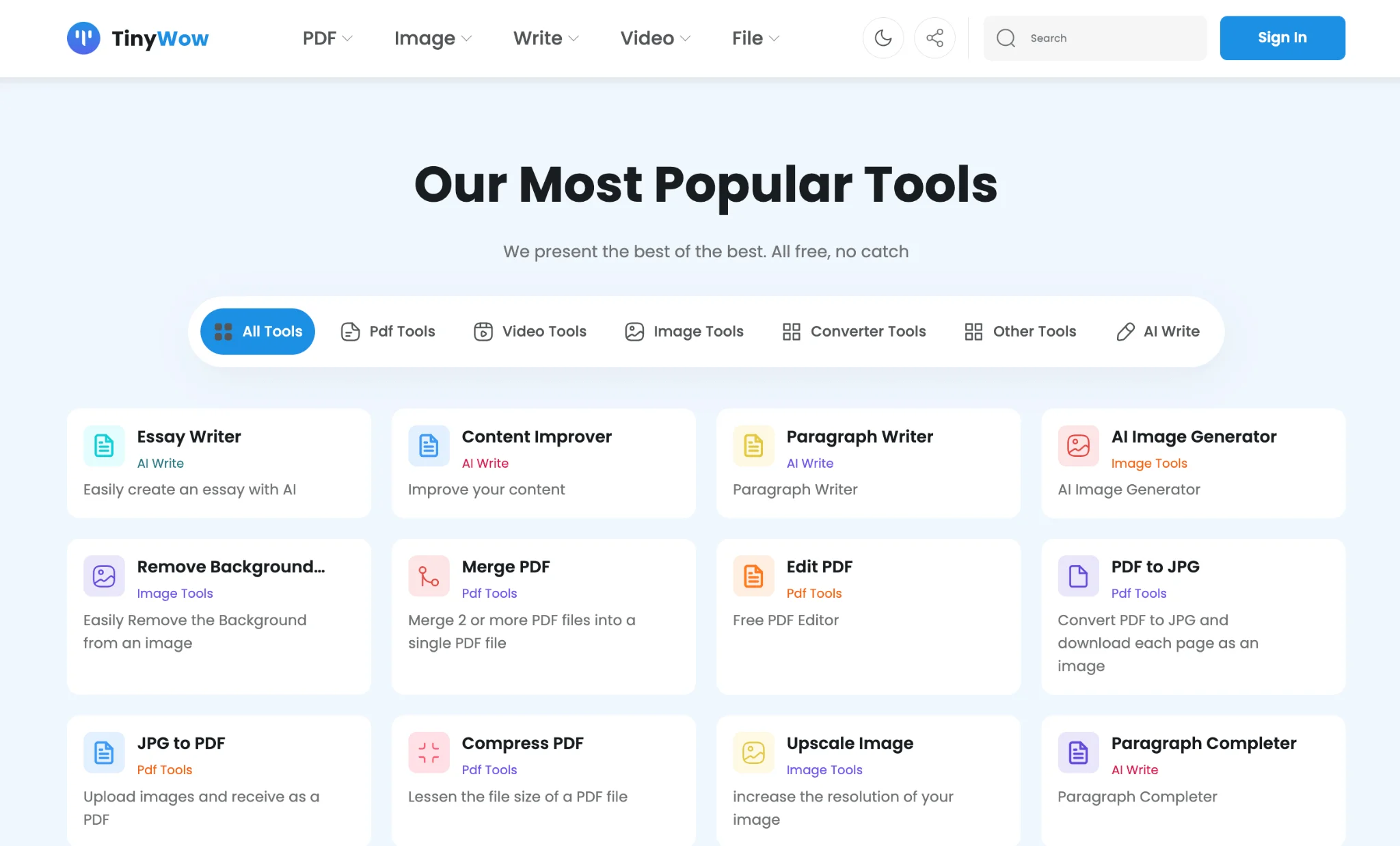
1. Versatile File Conversion Tools
TinyWow excels at simplifying file conversions. Whether you need to:
Convert PDFs to Word documents
Merge multiple PDFs into one file
Turn JPG images into PDF TinyWow covers these and many other file conversion tasks, all with just a few clicks. For students, the useful measure is whether it improves the workflow while keeping the final judgment in human hands.
2. AI-Powered Writing Assistance
TinyWow offers AI-driven tools to assist with content creation, such as:
Paragraph Writing: Generate paragraphs based on given topics. Treat the result as material to review and reshape, not as a final answer to submit unchanged.
Sentence Rewriting: Reword sentences for clarity or style.
Essay Drafting: Create initial essay outline or drafts.
3. Image and Video Tools
TinyWow also provides practical solutions for working with images and videos, including:
Image Editing: Background removal, resizing, compression, and AI-generated images. Treat the result as material to review and reshape, not as a final answer to submit unchanged.
Video Processing: Compress videos, convert videos into GIFs, and extract audio from videos in MP3 format. This gives readers a clearer way to judge the tool without relying on unsupported claims.
Price: Free with Optional Premium Option
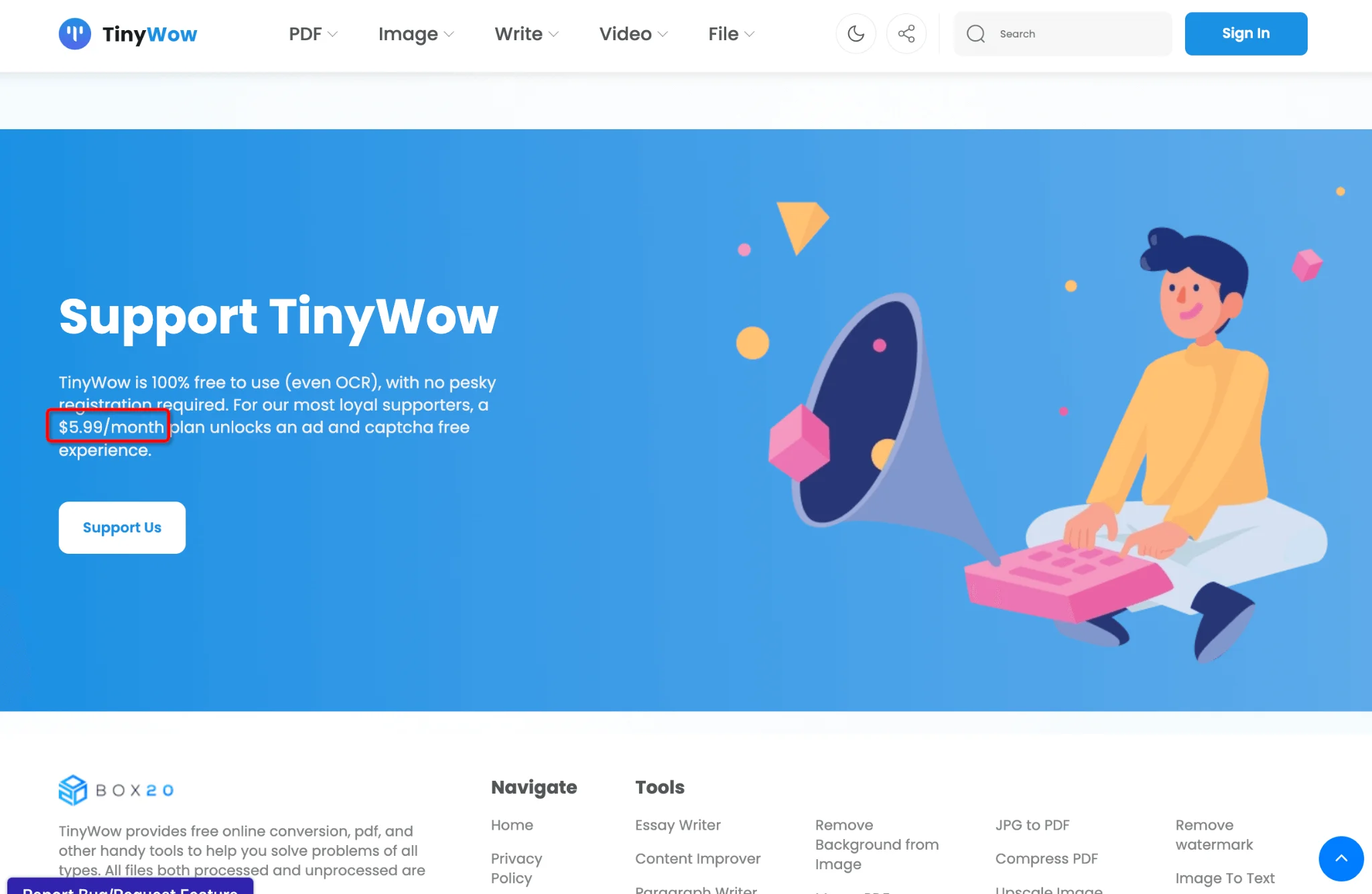
TinyWow is an AI-assisted writing or study tool that should be judged by output quality, control, and revision support. For students, the important test is whether it helps organize work without replacing source reading, critical thinking, or final editing.
TinyWoW Pros and Cons
Pros:
Fast Speeds: Efficient quick processing and file downloads The value is strongest when the saved time goes into checking evidence, citations, and assignment fit.
Privacy Protection Features: TinyWow says uploaded files are deleted after a short period, though sensitive academic or personal documents still deserve caution. This is useful for routine files, but sensitive academic or personal documents still need extra caution.
Multiple Languages Supported: Platform is more accessible to wider audience. This is most useful when multilingual output is checked for local tone, terminology, and meaning.
The website is free to use: all utilities and tools provided by the website are offered at no cost. This is most helpful for testing a workflow before trusting it with important coursework.
Simple tool labels make it easy to find PDF, image, video, and writing utilities without technical language. This gives readers a clearer way to judge the tool without relying on unsupported claims.
Multiple Tool Integration: Merging tools for PDF, image, video, and text to have a smooth experience. This helps when one project needs several small utilities, but each output still needs a quality check.
Fast Processing Speeds: File conversions and operations are quick to save time. The value is strongest when the saved time goes into checking evidence, citations, and assignment fit.
Regular Updates: Constant improvements help secure the platform and keep it updated. This matters because web tools need ongoing maintenance to stay usable and trustworthy.
Accessible Anywhere: Tools that are browser-based and work on any device that has internet access. This is convenient for quick tasks, though browser-based work still depends on file size and connection quality.
Access Without Signup: Get into any content with no registration at all! This reduces friction for quick tests, though users should still check file privacy and output quality.
100% Free: No hidden fees or subscriptions. This helps with low-stakes tasks, but important academic work still deserves a final quality review.
Cons:
Limited File Format Support: Some file types may not be supported. This matters when students need help with billing, exports, or assignment deadlines.
No Offline Functionality: Requires an active internet connection to use the tools. Students should weigh this limitation against the exact writing task, source requirements, and instructor expectations.
Basic User Interface: While easy to use, it lacks advanced design elements. This matters because extra setup time can reduce the value of a quick writing tool.
Limited Advanced Features: Lacks some professional-level features, such as OCR for scanned documents. Students should weigh this limitation against the exact writing task, source requirements, and instructor expectations.
Basic Image Editing: Does not offer advanced image editing tools like retouching or color correction. This matters because polished AI output can still need evidence checks, brand review, and human judgment.
Video Quality Constraints: Compressed or converted videos may not meet professional quality standards. This matters because polished wording can still hide weak evidence, missing context, or factual mistakes.
Generic AI Writing: The writing tools are useful for quick starts, but they can sound generic and usually need substantial editing for academic depth. Students should weigh this limitation against the exact writing task, source requirements, and instructor expectations.
Dependence on Internet: Requires a stable internet connection, limiting functionality without it. This matters when students need to work offline, travel, or revise drafts in restricted network settings.
Limited Advanced Features Compared to Paid Software: Lacks certain specialized features found in professional, paid alternatives. This matters because students should know the real limits before building an assignment workflow around the tool.
Potential Quality Variations: Because TinyWow combines many utilities, quality can vary from one tool to another. Test the exact tool you need before building a workflow around it. This matters because polished wording can still hide weak evidence, missing context, or factual mistakes.
Tinywow AI Write Feature Tested
TinyWow includes many file, image, and writing tools, so this TinyWow review focuses on the areas students often care about most: the Essay Writer and AI Rephraser. I compared their draft quality with ChatGPT 4.0 and looked at grammar, structure, and AI-detection risk as practical review signals rather than absolute test results. Treat the result as material to review and reshape, not as a final answer to submit unchanged.
Test Method
For the test, we used TinyWow’s free version and ChatGPT 4.0 (free) to generate content based on the following prompt: Treat the result as material to review and reshape, not as a final answer to submit unchanged.
As an experienced essay writer, you are tasked with creating a comprehensive and well-structured essay outline on the topic of "The Impact of Social Media on College Students' Mental Health."
After generating the outputs, we compared writing quality, structure, grammar feedback, and detector results. These checks are only a snapshot; AI tools and detectors can change, and scores should not be treated as permanent performance guarantees. Scores can shift across detectors and drafts, so students should treat them as revision guidance rather than proof of authorship.
Essay Writer Test:
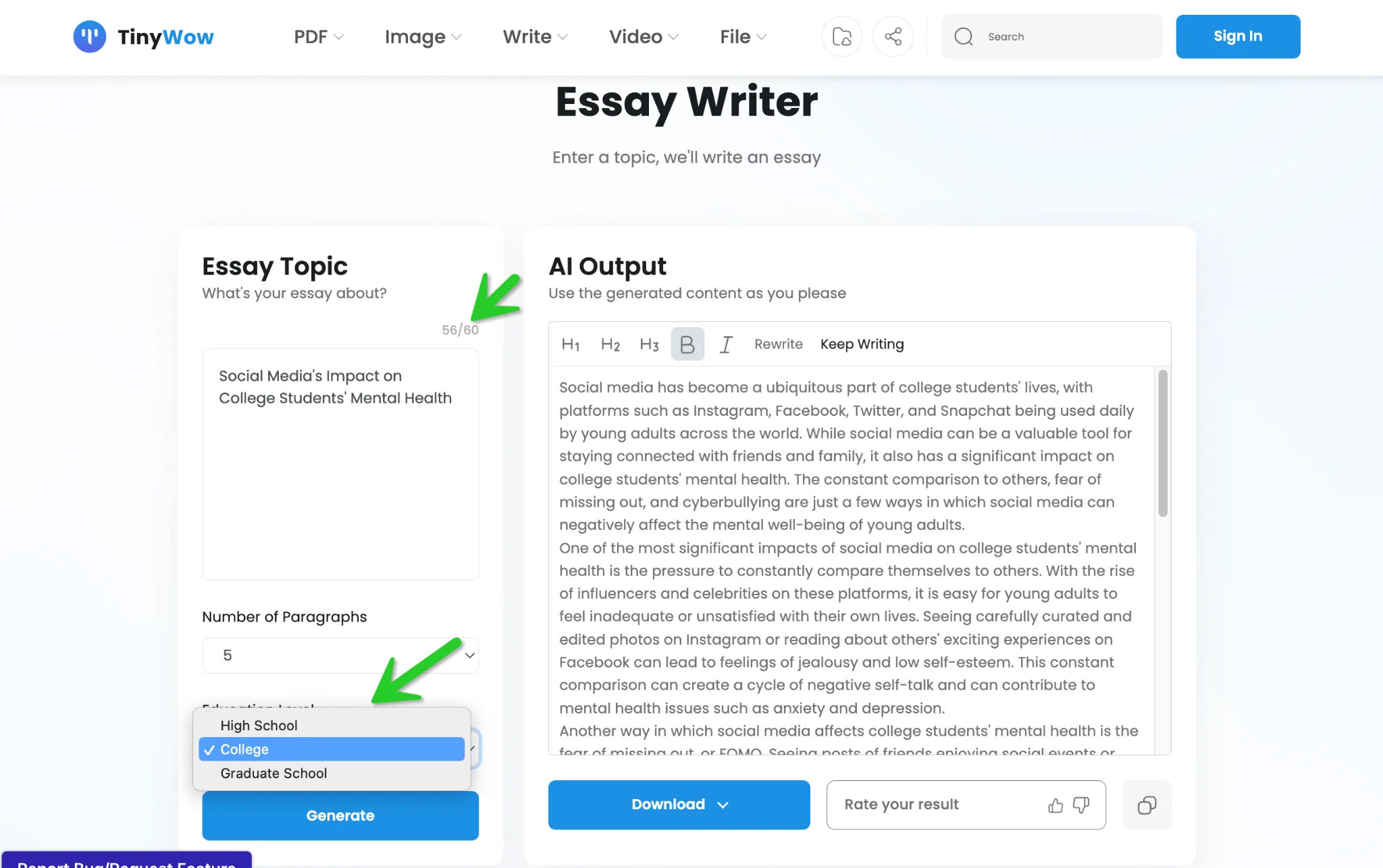
You enter a topic or prompt into TinyWow’s Essay Writer tool, and it writes you an essay draft. We tried it out by requesting a college-level essay with two paragraphs on the topic provided. Here’s how it went: Treat the result as material to review and reshape, not as a final answer to submit unchanged.
Input Essay Topic: The input for the tool will impose the 60 character limit, which may be limiting for more detailed prompts. The best decision is to match the tool to a specific task instead of treating it as a complete academic-work solution.
The essay took me about 1-4 minutes to generate. This is slower than some other AI writing tools but still reasonable for most users. Treat the result as material to review and reshape, not as a final answer to submit unchanged.
Features: Offers basic options for formatting (H1, H2, H3, bold, italic)
Enter between one and ten paragraphs, each about 100 words.
Quality: The output was usable as a basic starting point but needed revision.
It was less detailed and less organized than a polished academic draft. Treat the result as material to review and reshape, not as a final answer to submit unchanged.
It did not include much supporting data, source detail, or concrete examples. That support is useful only when students still verify sources, quotation accuracy, and citation style before submission.
The paragraphs were simple, so a student would still need to add analysis, evidence, and transitions for a stronger essay. For students, the useful measure is whether it improves the workflow while keeping the final judgment in human hands.
Comparison with ChatGPT 4.0:
For comparison, ChatGPT 4.0 produced a fuller draft in this test, with clearer organization and more developed ideas. That does not mean ChatGPT is always better, but it did handle this prompt with more depth than TinyWow. Treat the result as material to review and reshape, not as a final answer to submit unchanged.

Grammarly Score:
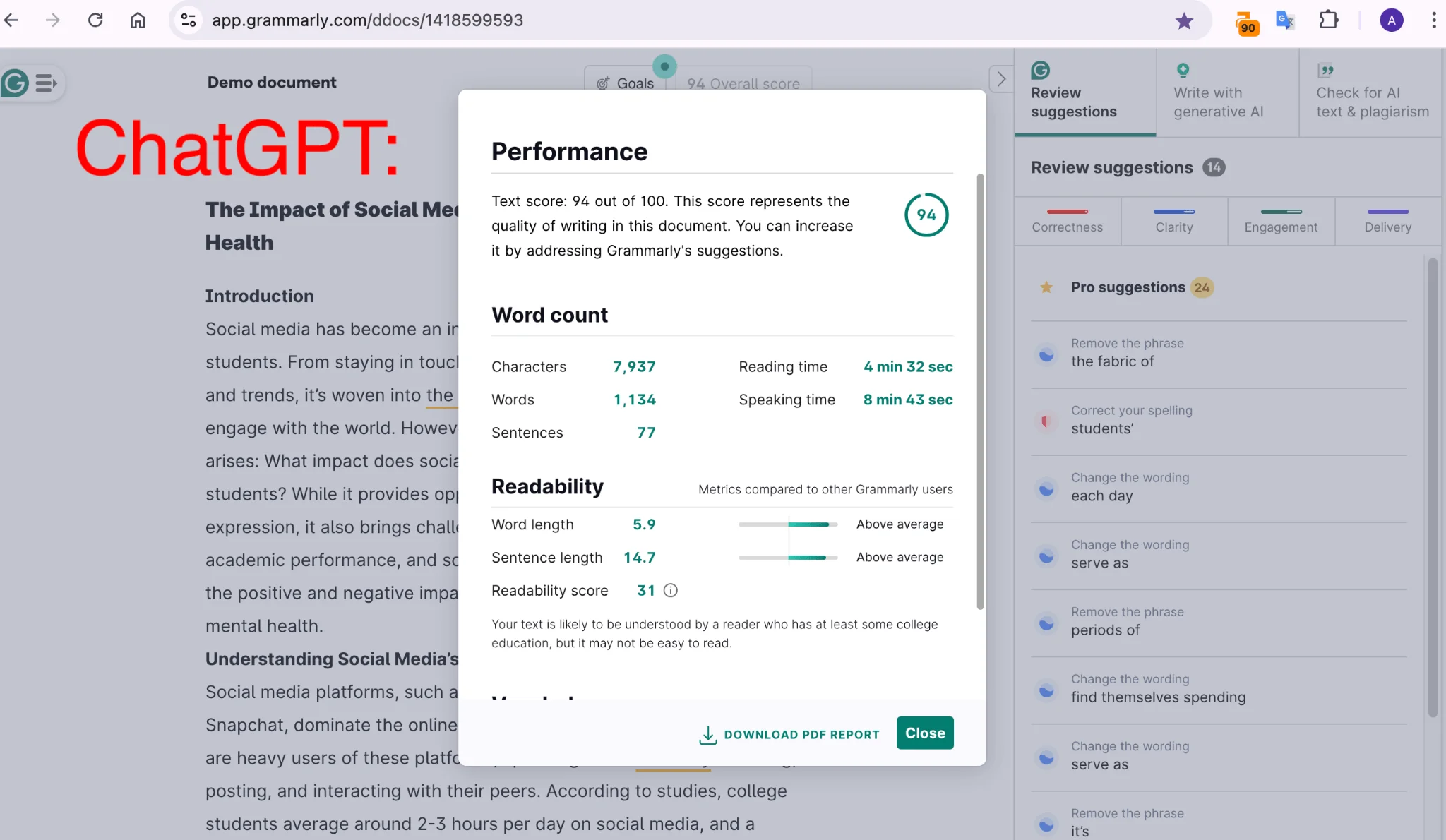
In the Grammarly check shown here, ChatGPT scored 94 and TinyWow scored 93, so the grammar difference was minor. Scores can shift across detectors and drafts, so students should treat them as revision guidance rather than proof of authorship.
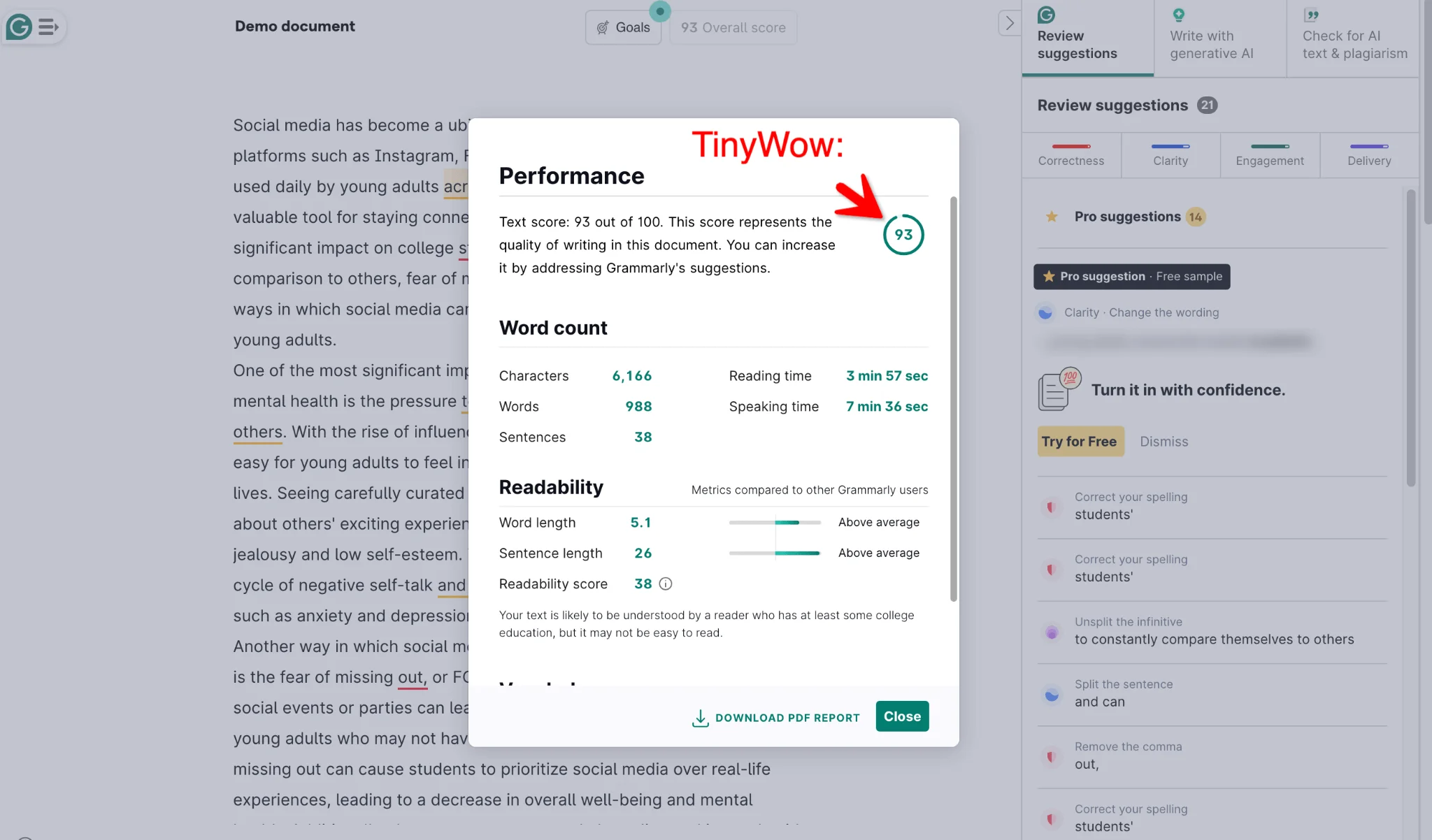
That suggests both outputs were readable at a sentence level, even though grammar scores do not measure argument quality, source use, or originality. Scores can shift across detectors and drafts, so students should treat them as revision guidance rather than proof of authorship.
AI Detection Scores:
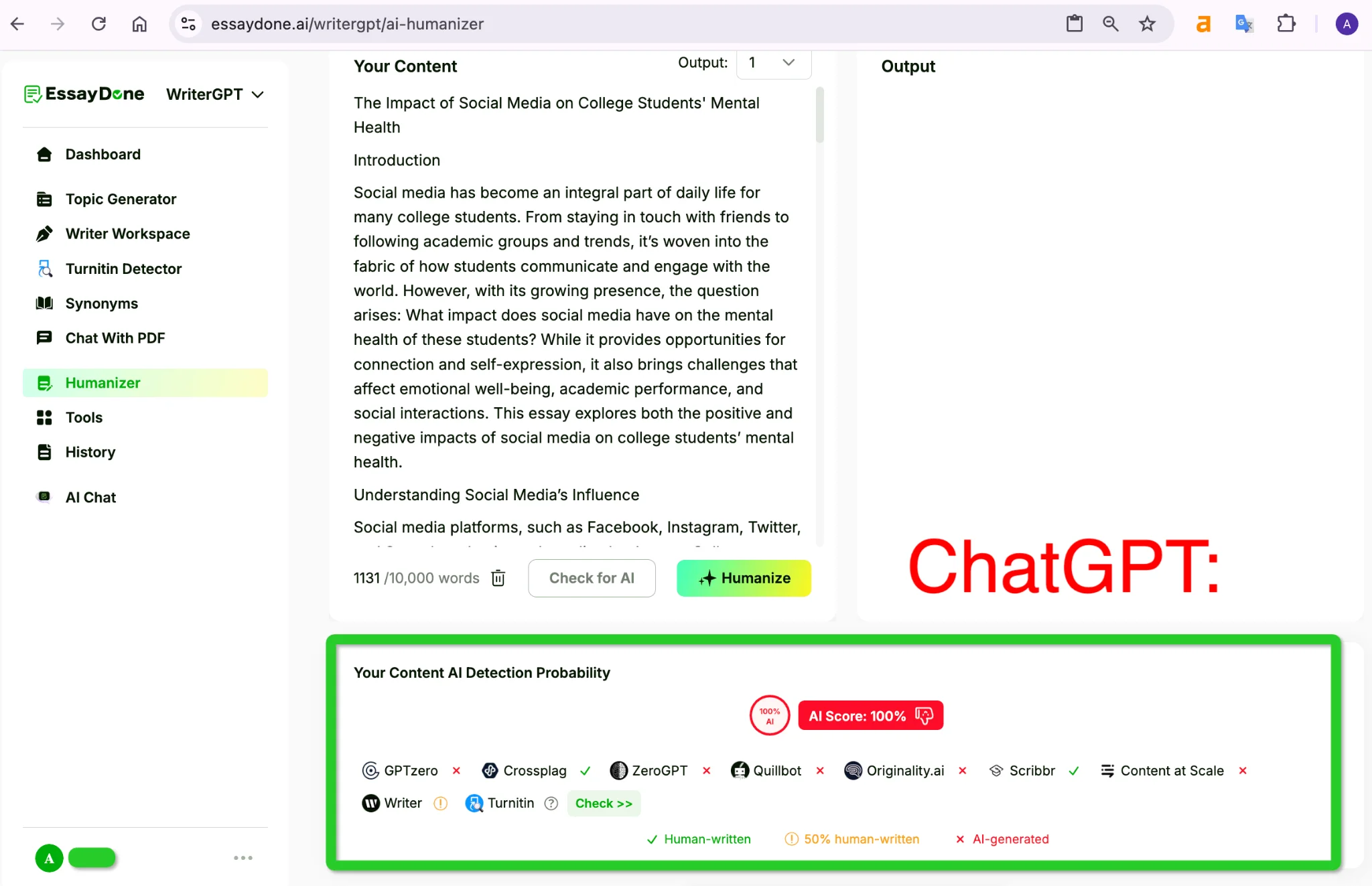
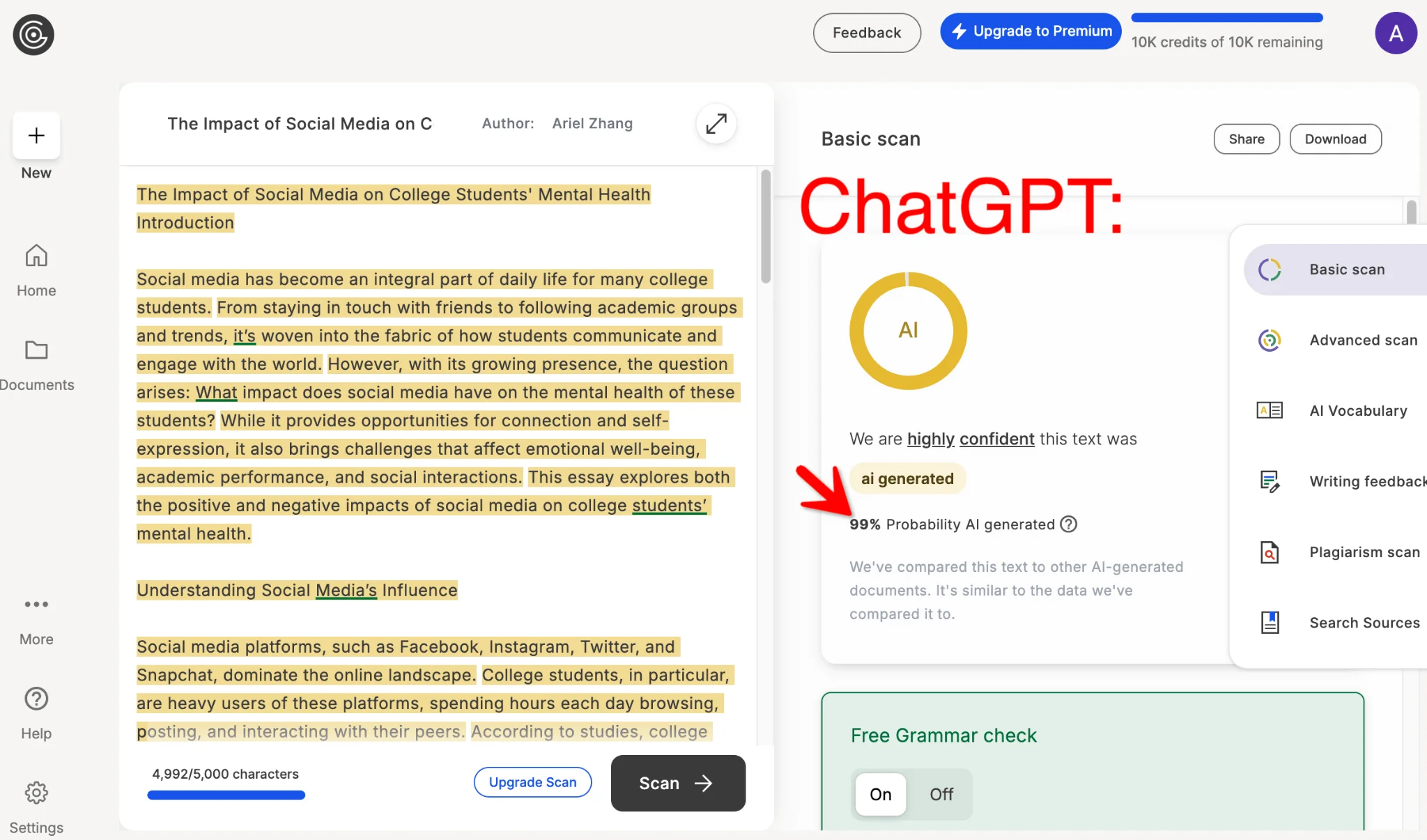
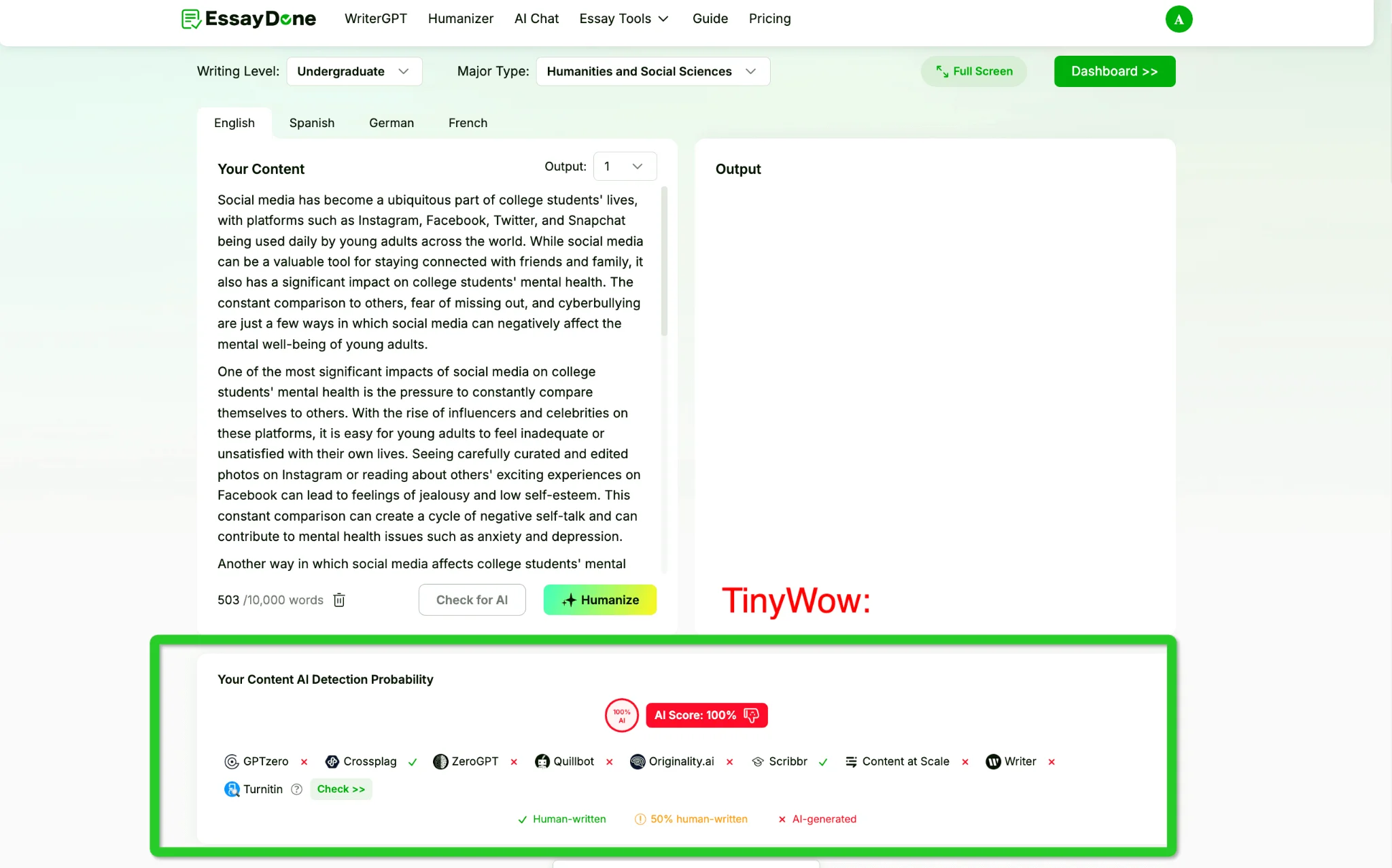
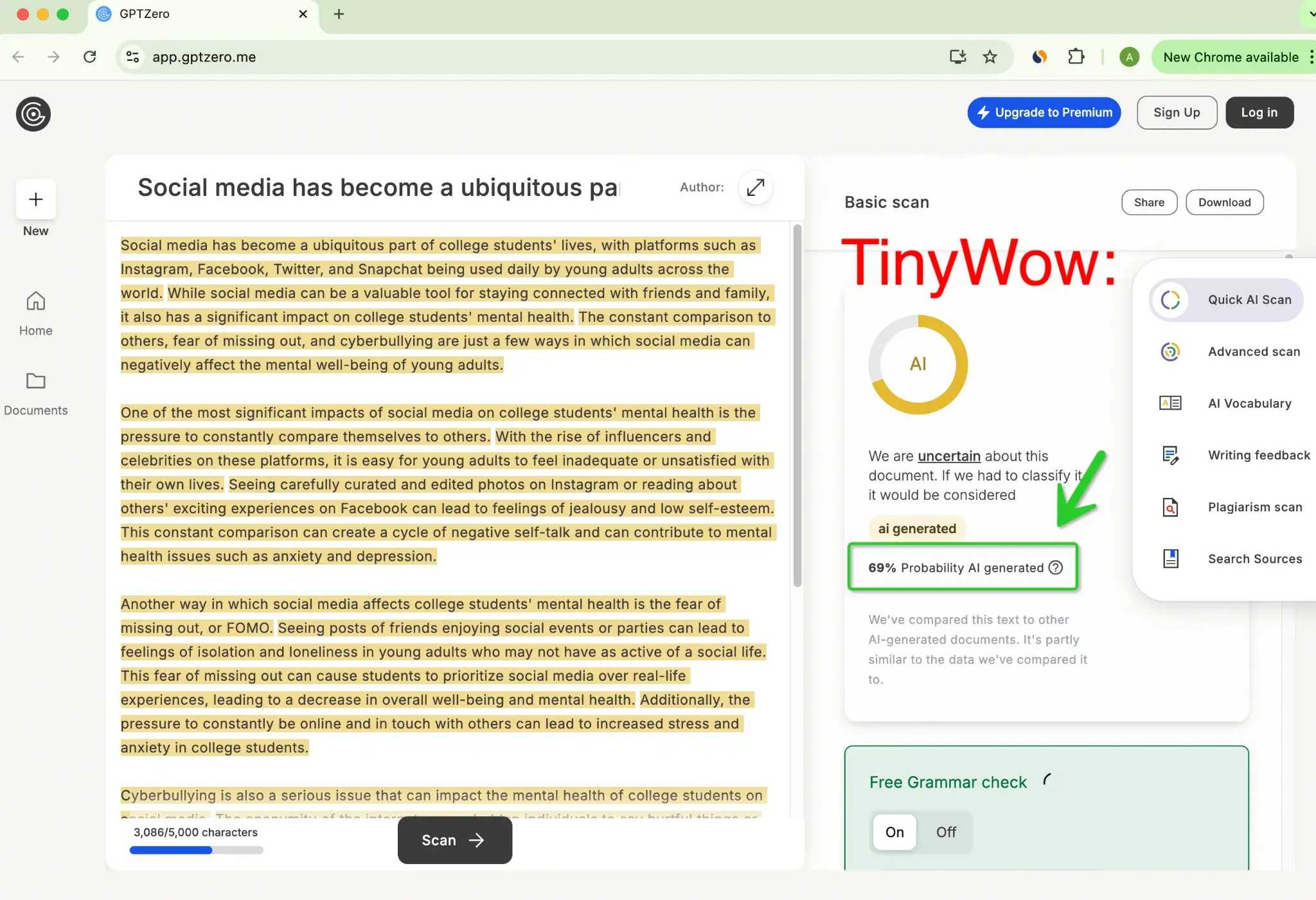
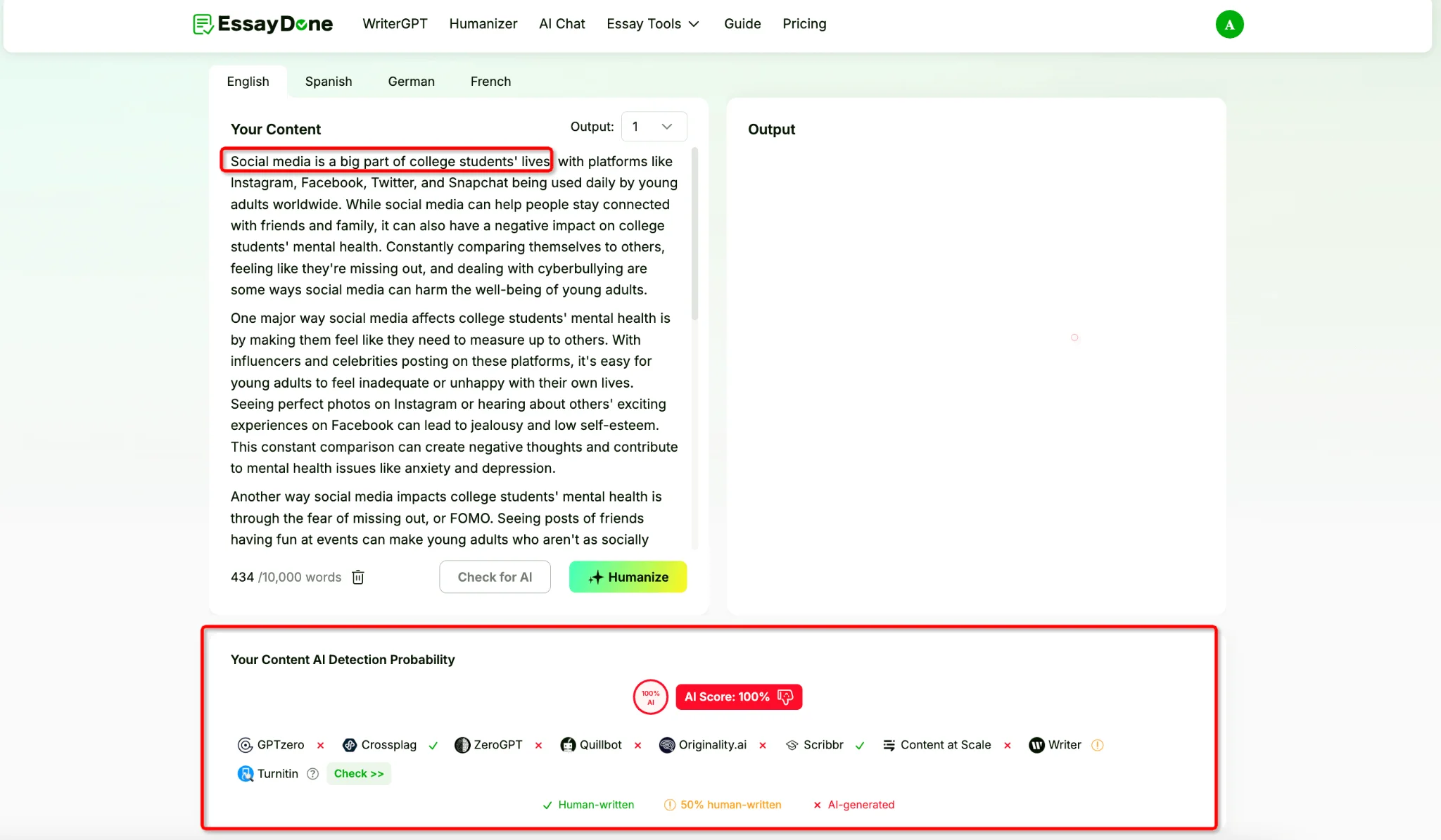
In this snapshot, EssayDone AI Checker marked both outputs as AI-generated. GPTZero showed a lower AI-likelihood score for TinyWow than for ChatGPT 4.0, but detector scores can vary by tool, text length, and later model updates. Scores can shift across detectors and drafts, so students should treat them as revision guidance rather than proof of authorship.
ChatGPT:
TinyWow:
AI Rephraser Test
Next, we tested TinyWow's AI Rephraser by pasting in the generated essay and using the Generate action to see whether the tool made meaningful style or structure changes. Treat the result as material to review and reshape, not as a final answer to submit unchanged.
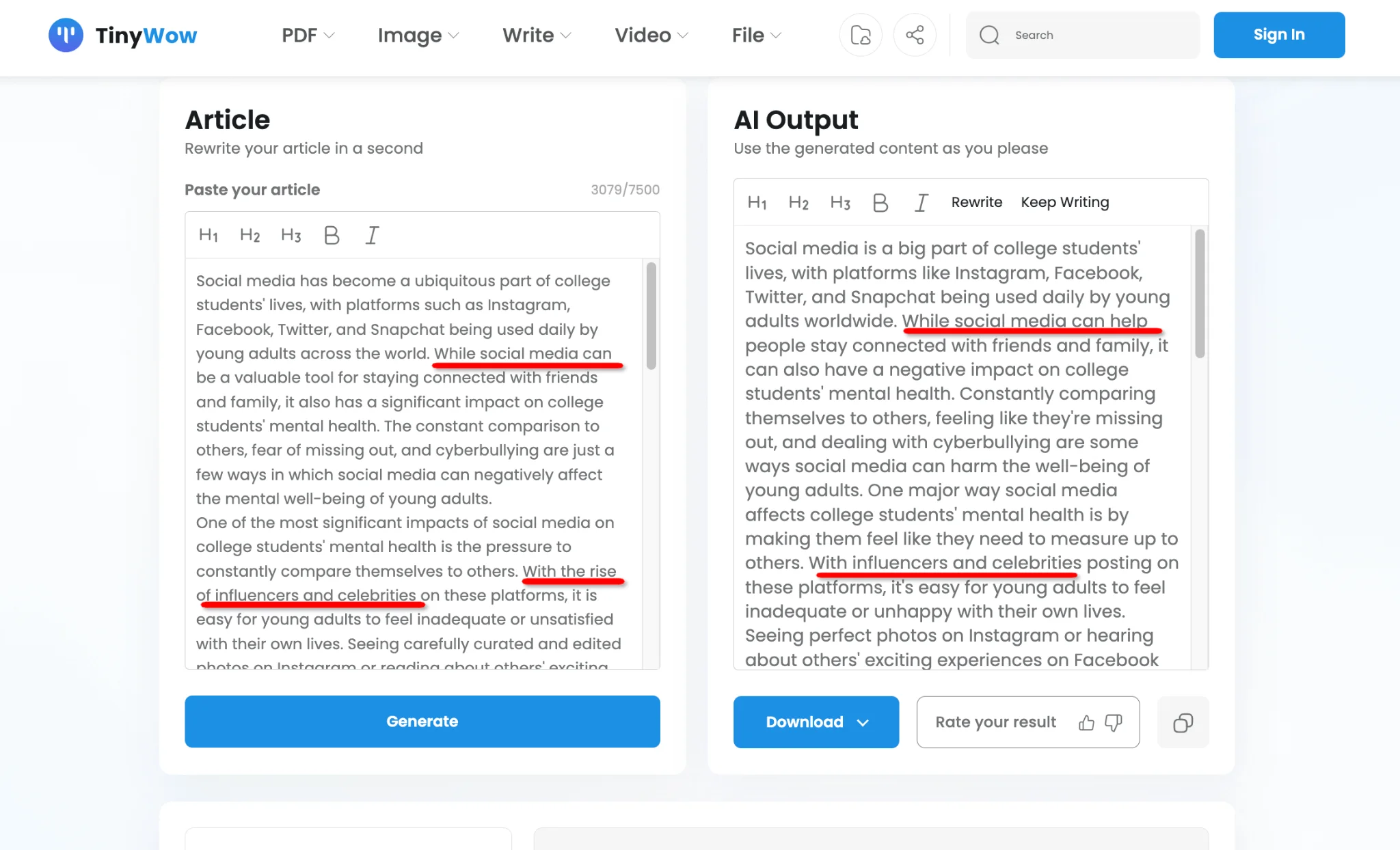
The rephrased version changed very little, and the structure stayed close to the original. It may help with light wording adjustments, but it is not enough for major revision, voice development, or responsible academic editing. For students, the useful measure is whether it improves the workflow while keeping the final judgment in human hands.
Conclusion:
The Essay Writer and AI Rephraser are useful for low-stakes drafts, but they have clear limits. That makes it better for early exploration than for polished academic or professional final drafts.
They work best for beginners who need a free starting point. Writers who need nuanced argumentation, strong examples, or source-based reasoning will need deeper revision or a more academic writing tool. Use that boundary to decide when a more specialized tool or manual editing pass is worth the time.
If you need higher-quality long-form writing, source management, or more flexible draft control, compare TinyWow with a specialized writing platform before relying on it. Compare the output with at least one alternative before deciding whether the subscription fits your workload.
TinyWow AI Alternatives: TinyWow vs. EssayDone WriterGPT
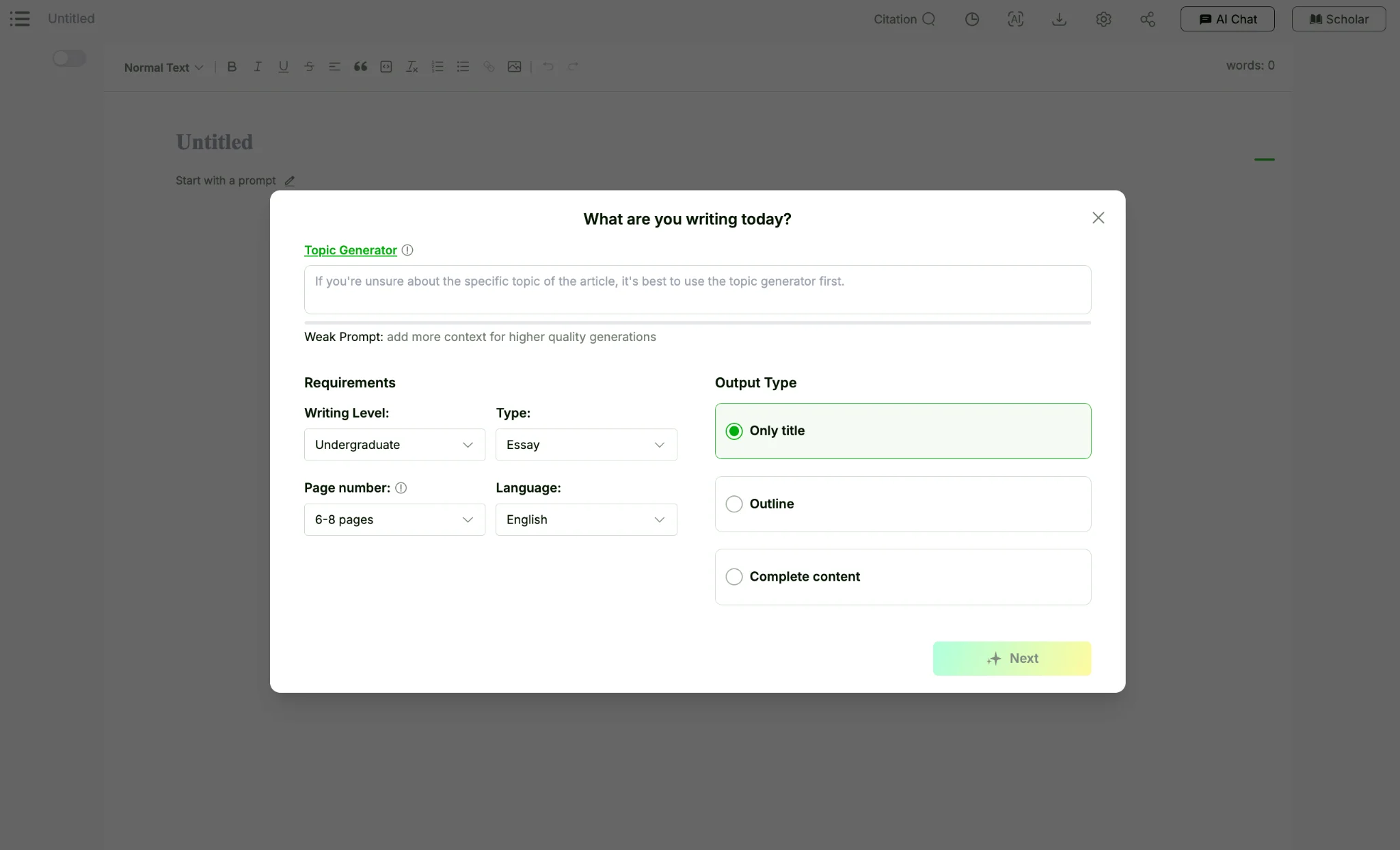
Although TinyWow provides a convenient and easy-to-use solution for basic essay writing tasks, it falls short in terms of writing depth, complexity, and versatility compared to alternatives like EssayDone. Let's compare the features of both platforms to highlight where EssayDone WriterGPT surpasses TinyWow.
Why EssayDone is Better:
Long Essay Generation: EssayDone can generate longer academic drafts and supports extended essays, while TinyWow is better suited to shorter, simpler outputs. Treat the result as material to review and reshape, not as a final answer to submit unchanged.
EssayDone has multilingual support: over 60. TinyWow has very few.
Advanced Features: EssayDone includes more academic workflow features, such as adjustable writing levels, assignment prompt uploads, synonym review, reference management, and source importing. That support is useful only when students still verify sources, quotation accuracy, and citation style before submission.
Export Options: EssayDone offers more flexibility with PDF and Word exports.
Academic Review Tools: EssayDone includes AI detector access and writing review tools that can help users check AI-likeness and revise more carefully. Treat this as feedback, not as a promise that any detector result will change. Scores can shift across detectors and drafts, so students should treat them as revision guidance rather than proof of authorship.
Overall, TinyWow is a convenient free toolbox, while EssayDone is better for students who need deeper academic drafting, citation support, and a more complete writing workflow. That support is useful only when students still verify sources, quotation accuracy, and citation style before submission.
FAQ
1. Is TinyWow really free?
TinyWow pricing, plan names, and usage limits can change, so treat this section as a decision guide rather than a permanent price sheet. Before subscribing, check the live checkout page and compare the paid features with the amount of writing, research, or revision work you actually need.
2. What are TinyWow's top features?
TinyWow’s popular tools, such as the AI Essay Writer, Background Remover, and PDF to Word Converter, are for personal and professional use. Use the answer as a practical starting point, then check the tool output against your assignment, source material, and instructor rules.
3. How does TinyWow stack up against other free AI writing tools?
TinyWow pricing, plan names, and usage limits can change, so treat this section as a decision guide rather than a permanent price sheet. Before subscribing, check the live checkout page and compare the paid features with the amount of writing, research, or revision work you actually need.
4. Is TinyWow safe to use?
TinyWow can be safe for ordinary files, and the service states that uploaded files are deleted after a short period. Avoid uploading highly sensitive documents unless you have reviewed the current privacy terms. Use the answer as a practical starting point, then check the tool output against your assignment, source material, and instructor rules.
5. What is TinyWow used for?
TinyWow is an AI-assisted writing or study tool that should be judged by output quality, control, and revision support. For students, the important test is whether it helps organize work without replacing source reading, critical thinking, or final editing.
6. Does TinyWow have an app?
Yes, TinyWow has an app available on the Play Store for users who would like to take the platform with them on the go. Use the answer as a practical starting point, then check the tool output against your assignment, source material, and instructor rules.
7. Can TinyWow humanize AI text?
Yes, TinyWow can humanize AI text, but it may still result in a high AI score. For a lower AI score, you may need stronger AI humanizers.
Conclusion
In short, TinyWow is a useful toolbox for a wide range of needs, from AI writing to photo editing. The strongest use case is a narrow support task followed by careful human review.
It works best for everyday users who need simple browser-based utilities without a long setup process. For advanced design work, source-heavy essays, precise formatting, or polished academic writing, treat TinyWow as a starting point rather than a complete replacement for specialized tools. Use that boundary to decide when a more specialized tool or manual editing pass is worth the time.