






Pangram AI Detector Review: Human, AI and Mixed Text Tested

A detector can identify a fully AI-generated passage and still give a different result when AI-written text appears inside a human-written document. That mixed case is especially interesting because it shows how the tool handles a document with more than one writing source.
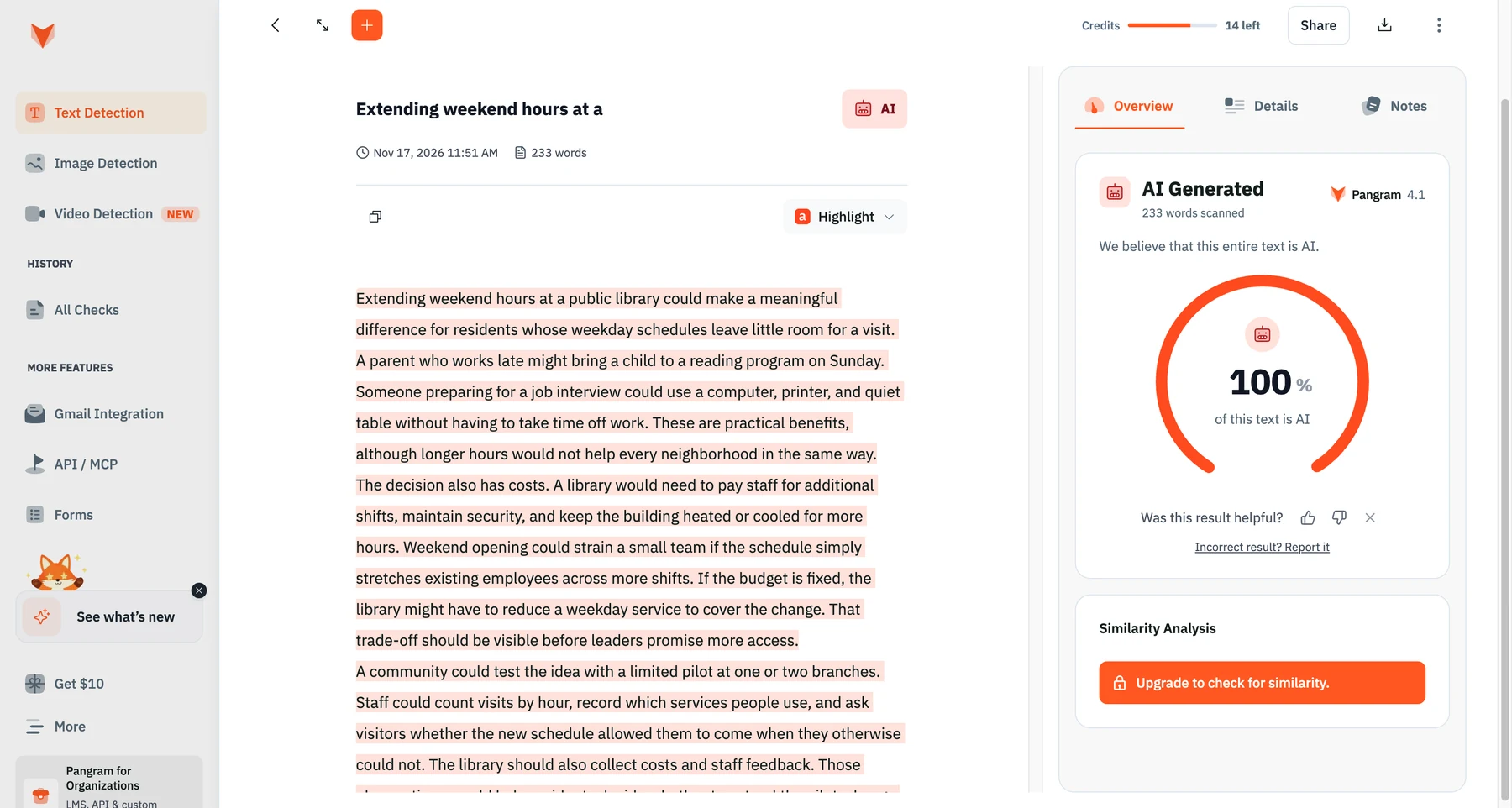
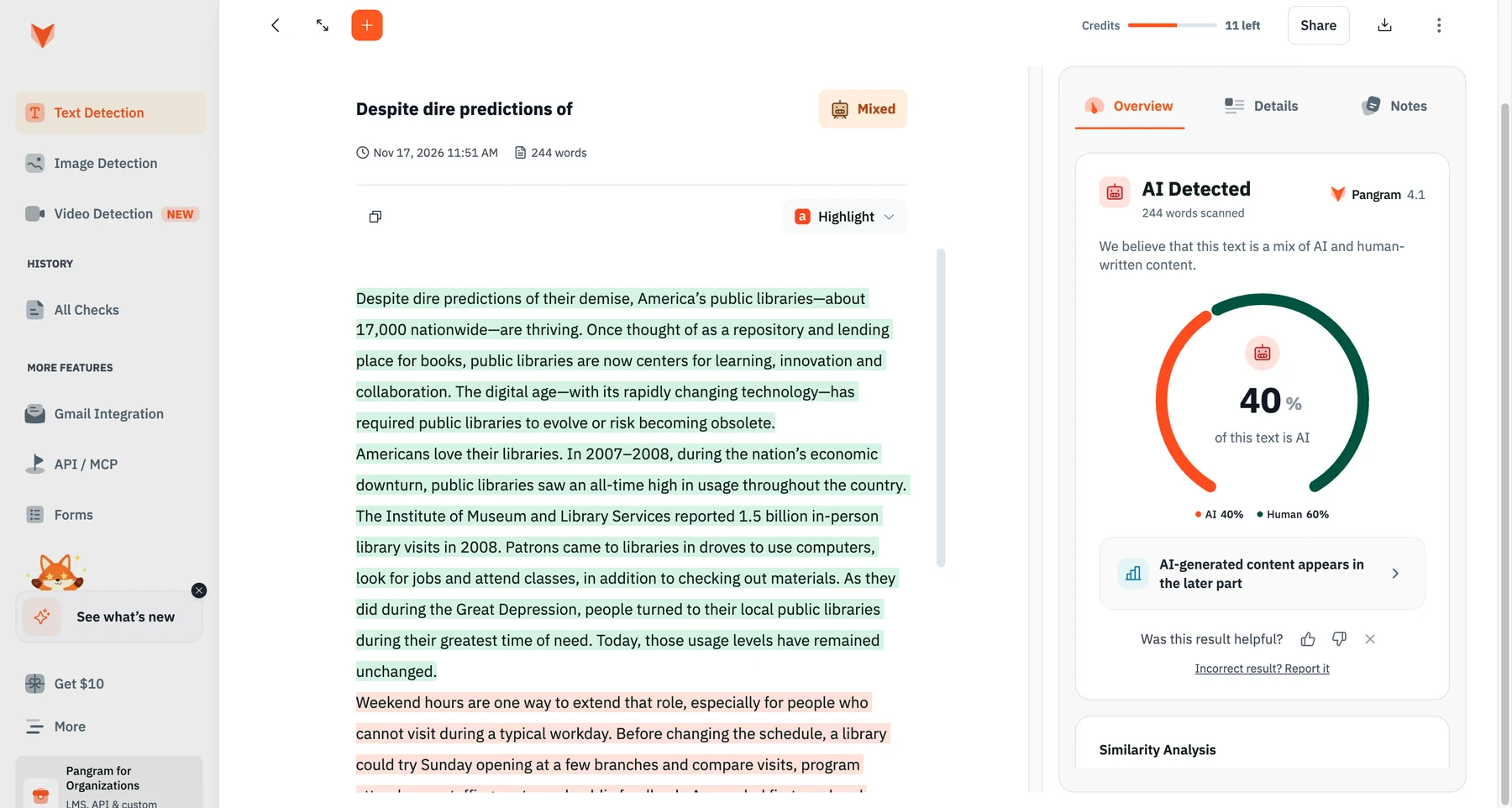
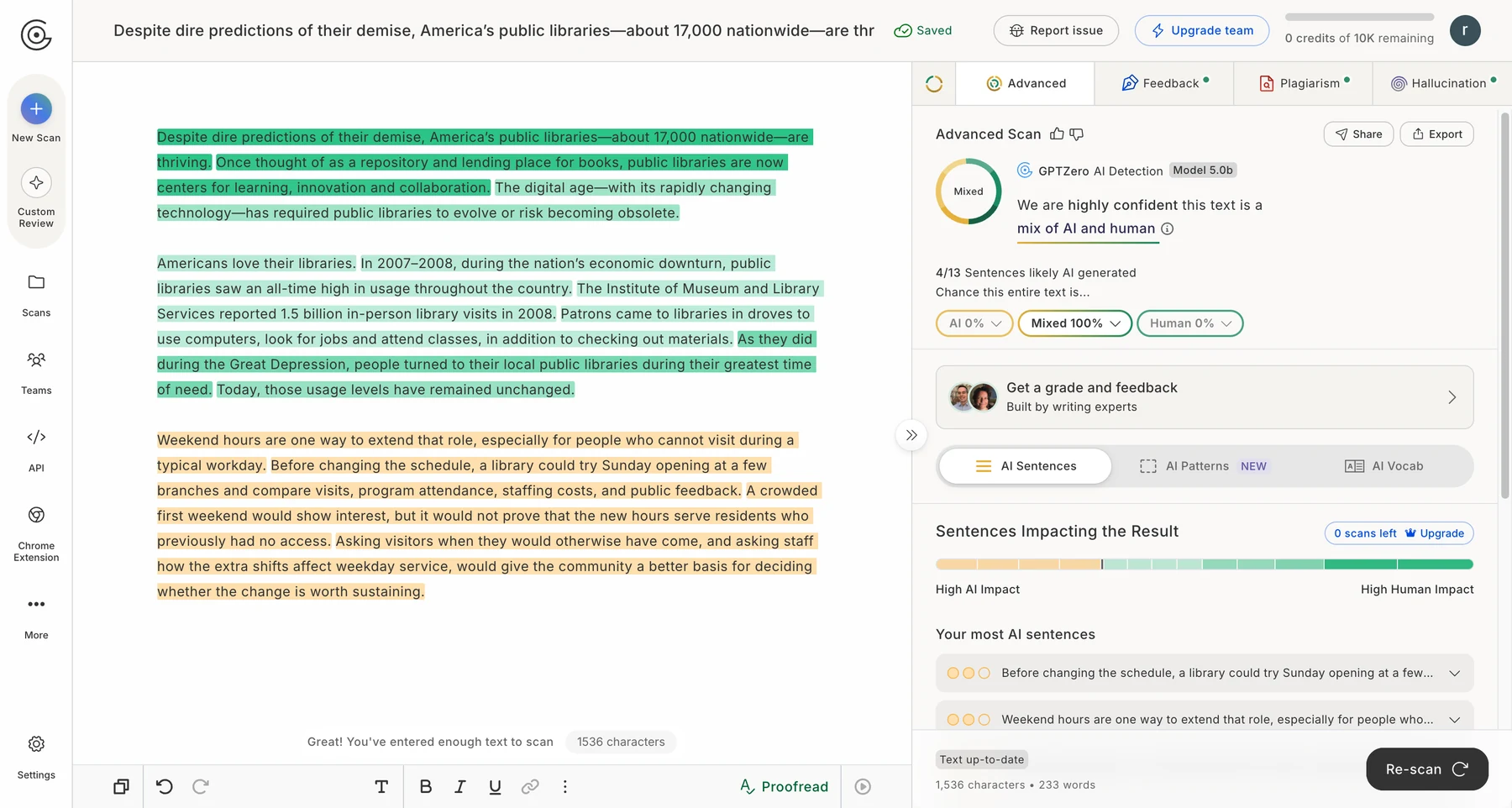
We tested Pangram 4.1 with three passages about public libraries: a published human-written article, a new AI-generated passage, and a mixed version that combined the two. Pangram classified the first as 100% Human, the second as 100% AI, and the mixed passage as 40% AI / 60% Human. We then submitted that same mixed passage to GPTZero, which classified it as 100% Mixed.
Pangram's results on three samples
| Sample | Pangram 4.1 result |
|---|---|
| Published human writing | 100% Human |
| AI-generated passage | 100% AI |
| Mixed human + AI passage | 40% AI / 60% Human |
The human sample came from Yvonne Dooley's “America's Public Libraries,” published by the Library of Congress in May 2016. The AI passage was generated for this test on the same broad topic: whether public libraries should extend weekend opening hours. The mixed sample kept the first two human paragraphs unchanged and added one AI-generated paragraph about evaluating weekend hours.
How did GPTZero classify the same mixed passage?
GPTZero Model 5.0b returned AI 0%, Mixed 100%, Human 0% for the same text. Its report described the document as a mix of human and AI writing.
The two outputs use different labels. Pangram's 40% AI / 60% Human is its text classification. GPTZero's 100% Mixed is the model's confidence in the mixed category; it does not mean that every word was AI-generated. The useful observation is that both tools recognized the passage as mixed, while presenting that result in different ways.
What does Pangram's free access include?
In our logged-in session, the checker showed 20 credits available. The three sample scans used nine credits in total, leaving 11. The interface displayed a rate of one credit per 100 words for text detection.
The captured pricing page listed two paid plans:
| Plan | Displayed price | Published allowance |
|---|---|---|
| Individual | $20/month after a 7-day trial | Up to 300,000 words, 600 images or 50 minutes of video per month |
| Professional | $65/month | Five times the Individual scan allowance |
The pricing page did not list the free checker credits as a separate paid-plan row, so the 20-credit balance above is an observed account allowance, not a monthly word quota. Check Pangram's current pricing page for the latest paid-plan details.
Is Pangram worth trying?
Pangram handled these three samples cleanly: the published human passage was labeled human, the generated passage was labeled AI, and the combined passage received a mixed result. Its report also placed the AI-generated material later in the combined text. GPTZero classified the same passage as mixed, although it expressed the result differently.
If you want to see how a detector handles mixed writing, Pangram is worth trying with a passage whose source you know. Look at the report's text classification and the highlighted portion together. The overall label is useful, but the location of the flagged writing is what helps you understand how the tool read the document.
If you would like to compare another set of reports, EssayDone AI Detector offers paid access to GPTZero, Originality.ai and Winston AI results in one place. Keep your passage beside the reports and look at the sentences they flag. That gives you something concrete to work with when the scores leave you wondering what to do next.